
Madagáscar · Projecto de longo prazo / Long-term project
Zafimaniry
Felibert e a aldeia de Sakaivo / Felibert and the village of Sakaivo
Há vozes que atravessam paredes. Em 2016, eu estava em casa da mama be (avó) Rakala, em Sakaivo, quando o Felibert ouviu uma voz diferente lá dentro e veio ver quem era.
Entre o francês e o malgaxe, apresentámo-nos com o básico: o nome e a idade. Tinha 71 anos. E disse, de peito cheio: «O meu nome de baptismo é Felibert!»
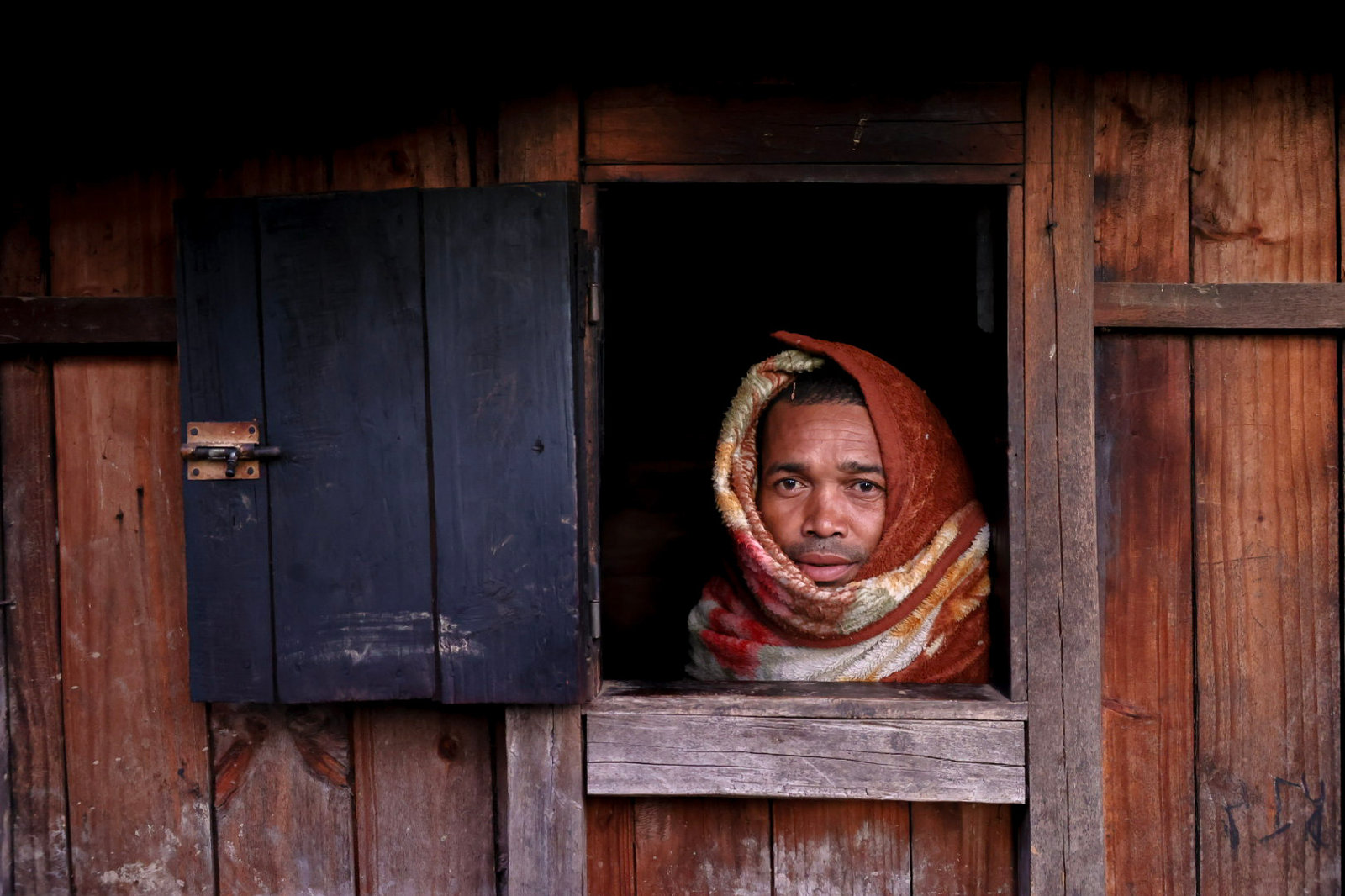
Desde o primeiro olhar, ali à porta, tive aquela certeza que de vez em quando nos aparece: que grande pessoa para fazer um retrato. Trazia um cobertor cheio de flores amarelas, vermelhas e laranja, bem à maneira dos Betsileo, o povo de onde vêm os Zafimaniry.
Some voices travel through walls. In 2016 I was inside mama be (grandmother) Rakala’s house in Sakaivo when Felibert heard an unfamiliar voice and came to see whose it was.
Switching between French and Malagasy, we managed the basics: name and age. He was 71. Then, proudly: “My baptism name is Felibert!”
From that first glance at the door I had the certainty that comes along every now and then: what a person to photograph. He wore a blanket covered in yellow, red and orange flowers, very much in the style of the Betsileo, the people the Zafimaniry come from.
I
Os que subiram à floresta / Those who went up into the forest
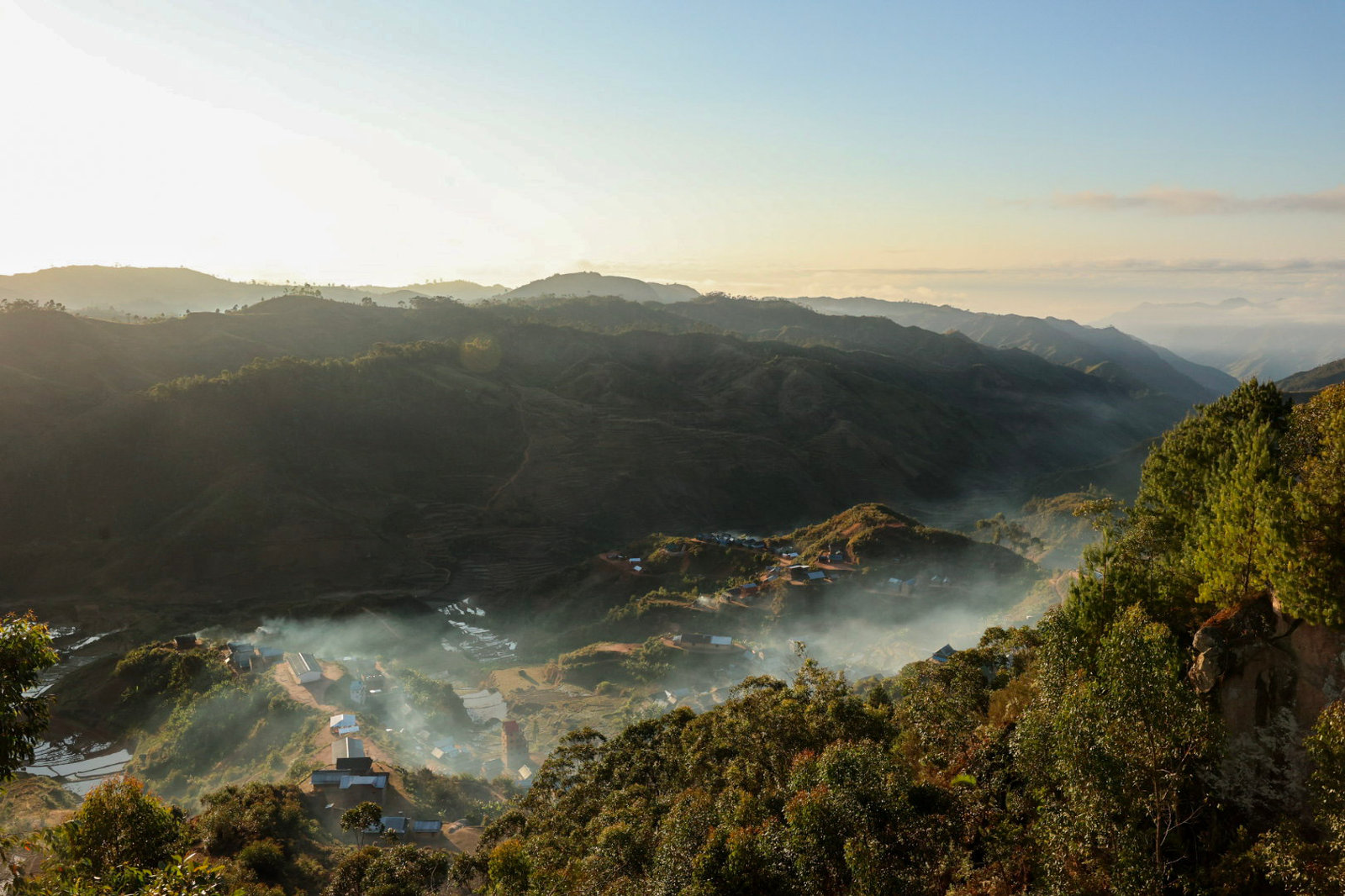
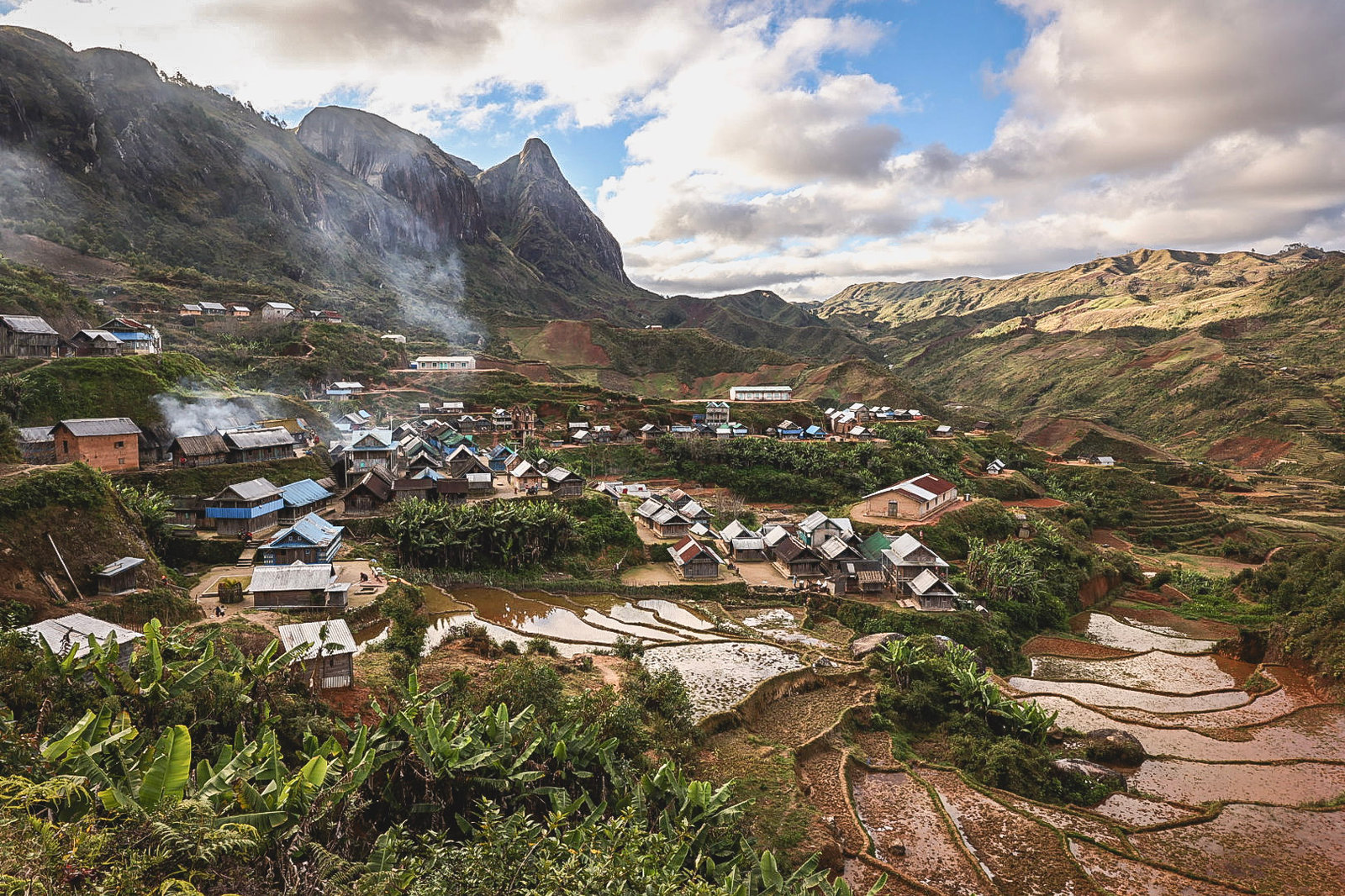
Sakaivo é uma pequena aldeia no meio das montanhas do centro de Madagáscar, uma das quase cem aldeias Zafimaniry espalhadas por uns 700 km².
Segundo a UNESCO, os Zafimaniry instalaram-se nesta floresta no século XVIII, à procura de refúgio da desflorestação que já devastava grande parte de Madagáscar. Outras versões contam que descendem de quem fugiu para o mato da rainha Ranavalona I, já no século XIX. Seja qual for o começo, construíram sempre em madeira e materiais vegetais, sem um único prego, casas que se podiam desmontar e voltar a montar noutro lado.
A floresta voltou a ser refúgio em 1947. Durante a revolta contra o domínio colonial, as aldeias Zafimaniry ficaram no caminho de quem se revoltava e os soldados franceses tomaram-nas por cúmplices. Houve prisões e aldeias queimadas, e muita gente fugiu para a floresta, onde viveu como nómada durante dois anos.
Esse saber de trabalhar a madeira foi reconhecido pela UNESCO como Património Cultural Imaterial em 2003. São hoje os últimos guardiões de uma arte que já foi de toda a ilha. Mas a floresta de Madagáscar tem vindo a desaparecer, e com ela a madeira que dá forma a este saber.
Sakaivo is a small village in the mountains of central Madagascar, one of nearly a hundred Zafimaniry villages scattered across some 700 km².
According to UNESCO, the Zafimaniry settled in this forest in the 18th century, seeking refuge from the deforestation that was already ravaging much of Madagascar. Other accounts say they descend from people who fled into the woods from Queen Ranavalona I in the 19th century. Whatever the beginning, they always built in wood and plant materials, without a single nail, houses that could be taken apart and put back together somewhere else.
The forest became a refuge again in 1947. During the uprising against colonial rule, Zafimaniry villages lay on the rebels’ route and French soldiers took them for accomplices. There were arrests and villages burned, and many people fled into the forest, where they lived as nomads for two years.
This woodcrafting knowledge was recognised by UNESCO as Intangible Cultural Heritage in 2003. The Zafimaniry are now the last keepers of a craft that once belonged to the whole island. But Madagascar’s forest keeps shrinking, and with it the wood that gives this knowledge its shape.


«O meu nome de baptismo é Felibert!»
“My baptism name is Felibert!”

II
Voltar / Coming back
Desde 2016 que volto a Sakaivo uma, duas, às vezes três vezes por ano. Só a pandemia interrompeu o caminho.
Voltar tantas vezes ao mesmo sítio é ver uma aldeia crescer devagar. Há mais casas do que havia, e cada vez mais vales à volta trabalhados para o arroz.
Um dos filhos da mama be Rakala ergueu uma casa de vários andares, em cimento e tijolo, que destoa de toda a madeira à volta, quase como quem quer assinalar a «riqueza» que terá. Ao lado, a mãe e o resto da família continuam a viver como sempre viveram, com humildade e nas condições precárias de sempre.
Since 2016 I have gone back to Sakaivo once, twice, sometimes three times a year. Only the pandemic broke the habit.
Returning so often to the same place means watching a village grow slowly. There are more houses than there used to be, and more of the surrounding valleys are worked for rice.
One of mama be Rakala’s sons has built a house several storeys high, in concrete and brick, at odds with all the wood around it, almost as if to signal the “wealth” he may have. Next door, his mother and the rest of the family still live as they always have, humbly and in the same precarious conditions.


III
Felibert / Felibert
Em 2022, o Felibert morreu de covid.
Ficam as fotografias, o cobertor de flores e aquela frase dita à porta da casa da mama be Rakala, com o orgulho de quem sabe bem quem é.
Há retratos que se fazem num instante. E há pessoas que ficam muito para além dele.
In 2022, Felibert died of covid.
What remains are the photographs, the flowered blanket and that sentence spoken at the door of mama be Rakala’s house, with the pride of someone who knows exactly who he is.
Some portraits take an instant. Some people stay far beyond it.
IV
A casa do Ralainzafi / Ralainzafi’s house
Desde que o Felibert partiu, quem nos recebe é o Ralainzafi, o novo ancião da aldeia. É pela casa dele que começa agora cada regresso a Sakaivo.
É uma das casas mais tradicionais de Sakaivo e das poucas que ainda têm o telhado original em bambu. Um rectângulo orientado para que um dos cantos fique virado a nordeste, o canto dos antepassados. Lá dentro, um espaço aberto, o lume a cozinhar sobre três pedras, o milho a secar e, atrás da porta de entrada, no canto em diagonal ao dos antepassados, o baú onde se guardam as galinhas.
Não há chaminé. O fumo de anos e anos escureceu a madeira, aquece a casa e afasta os mosquitos. Uma cama velha e gasta, pequenos bancos e pufes de papiro, onde os convidados se sentam para serem apresentados ao chefe e onde a comunidade se junta para falar dos assuntos da aldeia.
Hoje, é aqui que Sakaivo começa. Para mim, começou em 2016, à porta da mama be Rakala.
Since Felibert passed away, the one who welcomes us is Ralainzafi, the village’s new elder. His house is where each return to Sakaivo now begins.
It is one of the most traditional houses in Sakaivo and one of the few that still has its original bamboo roof. A rectangle set so that one corner faces northeast, the corner of the ancestors. Inside, one open space, a fire for cooking on three stones, maize hung to dry and, behind the front door, in the corner diagonally opposite the ancestors’ corner, the chest where the chickens are kept.
There is no chimney. Years and years of smoke have blackened the wood, warming the house and keeping the mosquitoes away. An old, worn bed, small stools and papyrus pouffes where guests sit to be introduced to the chief and where the community gathers to talk about village matters.
Today, this is where Sakaivo begins. For me, it began in 2016, at mama be Rakala’s door.




Fotografado em Sakaivo, Madagáscar, desde 2016. / Photographed in Sakaivo, Madagascar, since 2016.
 Próxima história / Next storyExpress de la Côte →