
Argentina
Patagónia
Na senda mística do Fitz Roy / On the mystic trail to Fitz Roy
Há sítios que procuro precisamente para isto: para que a força e a beleza da natureza me esmaguem e me ponham no meu lugar. O trilho do Fitz Roy fez-me isso a cada metro.
Foi no último dia de Março, com o Outono patagónico no auge e o tempo a mudar de ideias de hora a hora: chuva, arco-íris, neblina, umas abertas, chuva outra vez. A montanha quase nunca se mostrou inteira. E foi por isso mesmo que o dia teve o que teve de místico.
Conto-o também por outra razão. Sítios assim não estão garantidos, e a Patagónia anda a lembrar-nos disso.
There are places I look for precisely for this: so that the force and the beauty of nature crush me and put me in my place. The Fitz Roy trail did that to me with every metre.
It was the last day of March, with the Patagonian autumn at its peak and the weather changing its mind by the hour: rain, a rainbow, mist, a few breaks in the cloud, rain again. The mountain almost never showed itself whole. And that is exactly why the day had what it had of mystic.
I tell it for another reason too. Places like this are not guaranteed, and Patagonia has been reminding us of that.
I
Chuva na janela / Rain on the window
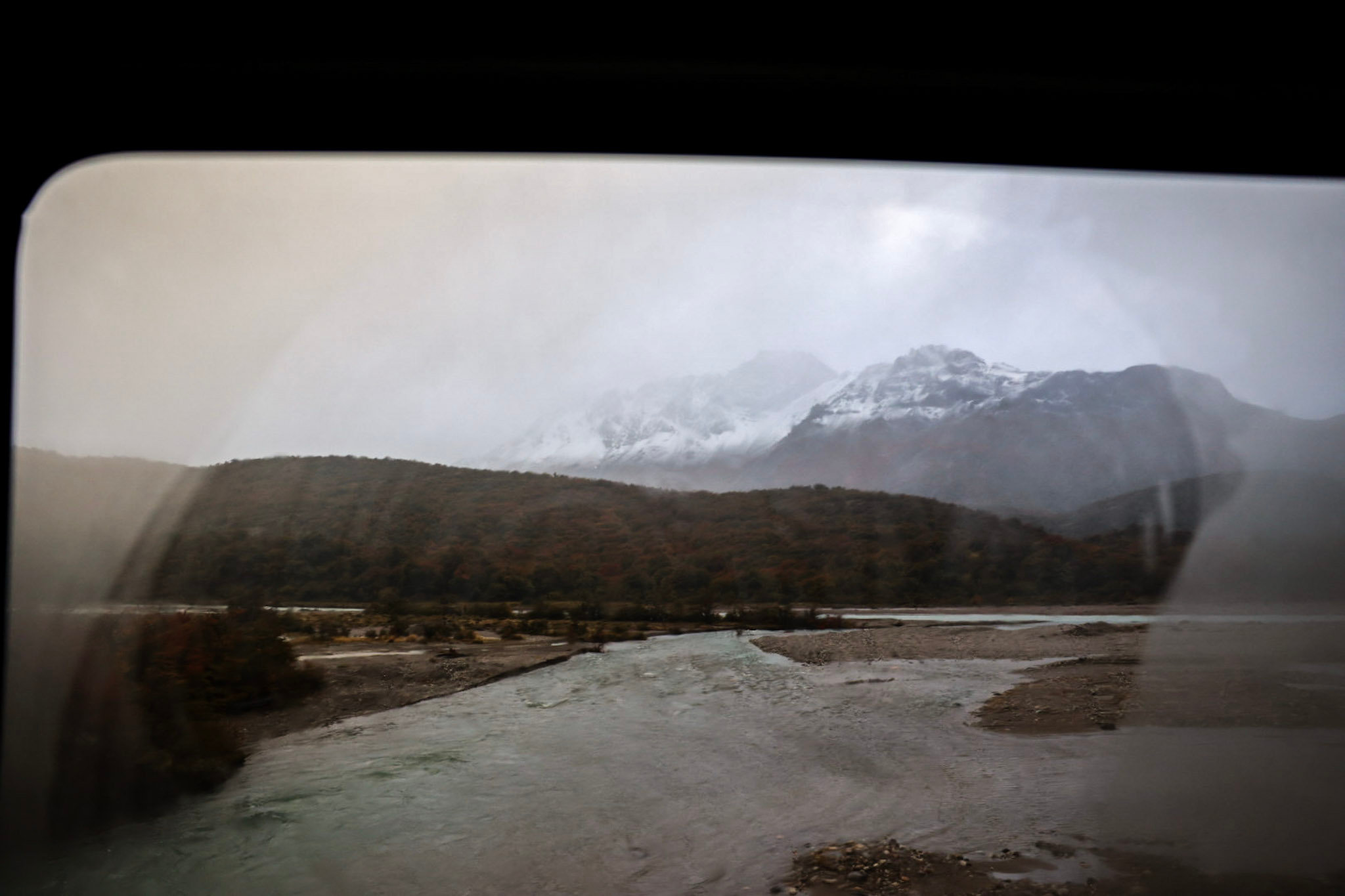
Saímos de El Chaltén com chuva. Da janela da carrinha, a estepe amarela e o rio de las Vueltas apareciam atrás das gotas, e as montanhas só se adivinhavam, com neve lá em cima.
O trilho começa na Hostería El Pilar, a uns quinze quilómetros da vila, onde o rio Eléctrico se junta ao de las Vueltas.
We left El Chaltén in the rain. From the window of the van, the yellow steppe and the Río de las Vueltas showed up behind the drops, and the mountains could only be guessed at, with snow up top.
The trail begins at Hostería El Pilar, some fifteen kilometres from the village, where the Río Eléctrico meets the Río de las Vueltas.


II
Um huemul, para começar / A huemul, to begin with
Ainda nem tínhamos saído da carrinha e apareceu um huemul. Não tenho fotografia para o provar.
O huemul (Hippocamelus bisulcus) é o veado dos Andes do sul e um dos mamíferos mais ameaçados das Américas. Restam uns 1500 em todo o mundo, repartidos por pequenos grupos isolados entre a Argentina e o Chile. Na Argentina é Monumento Natural Nacional. Por aqui, os avistamentos têm aumentado desde que o gado foi retirado desta zona do parque, em 2007: às vezes basta devolver-lhe o espaço. O Facu (diminutivo de Facundo), um dos guias de montanha que ia connosco, disse-nos que, em quatro anos por ali, tinha visto um huemul uma ou duas vezes. Nós vimos um antes de dar o primeiro passo.
Há dias que começam assim e uma pessoa fica sem saber o que pedir mais. A Patagónia respondeu com um arco-íris.
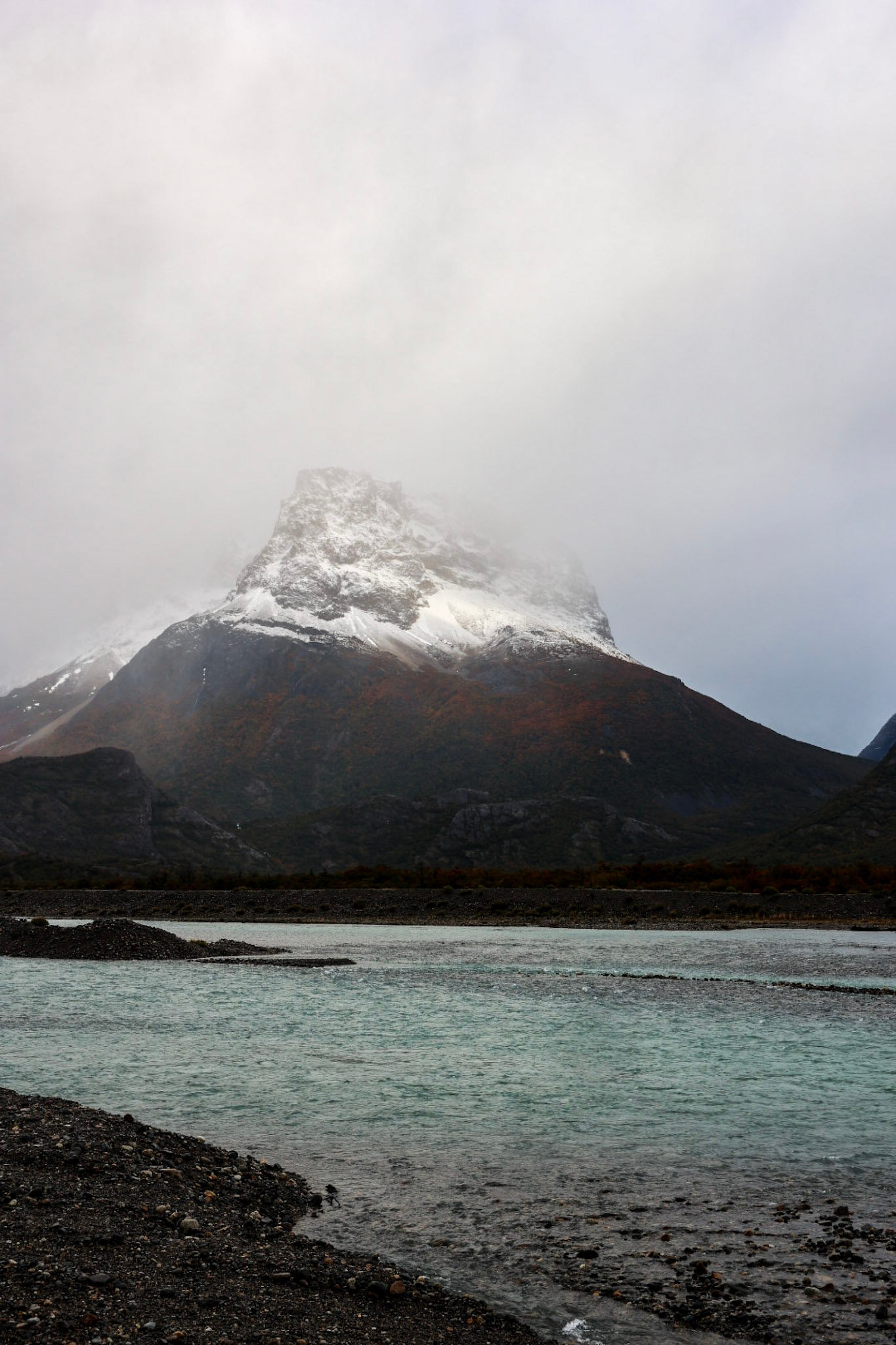
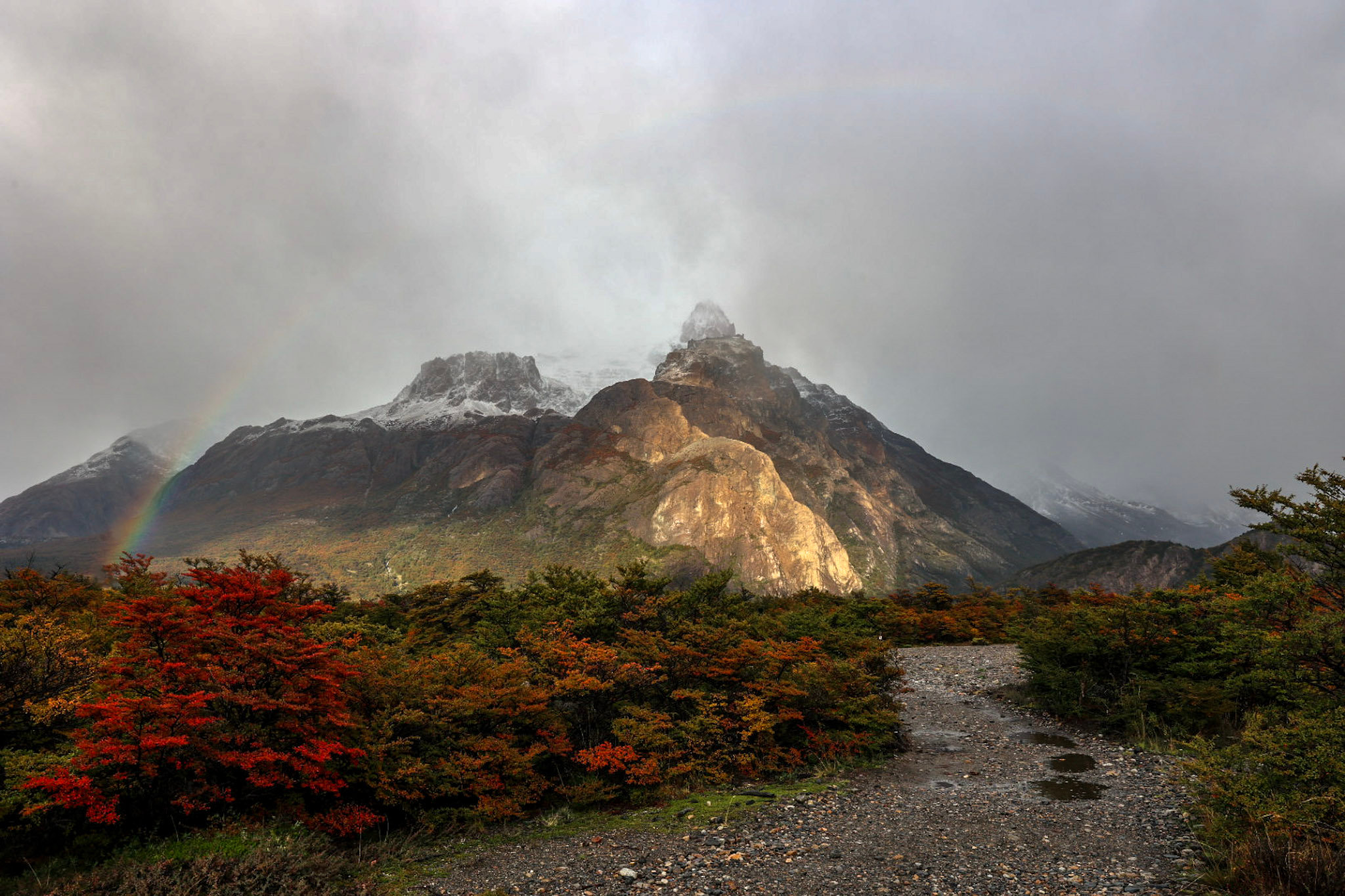
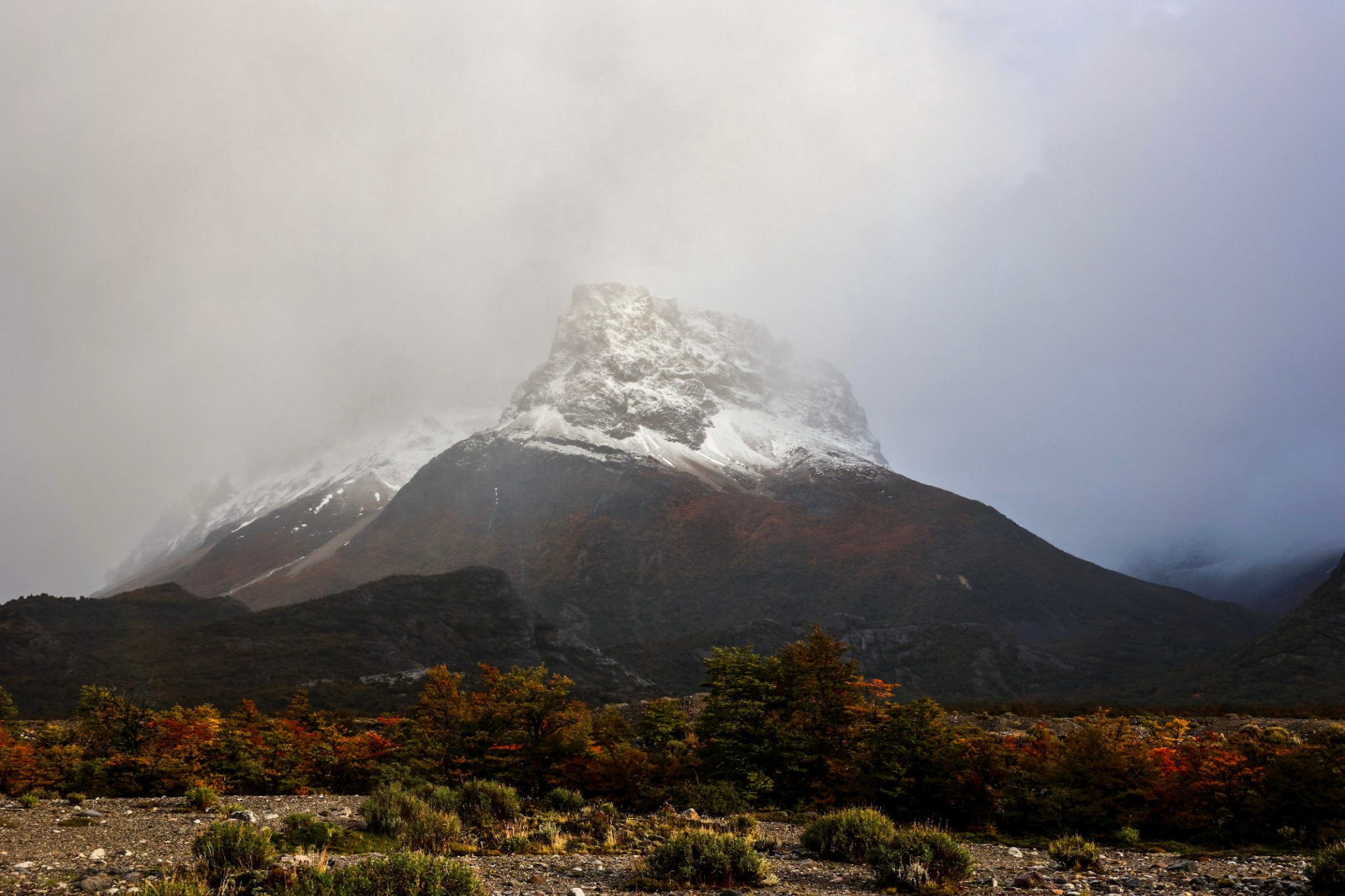
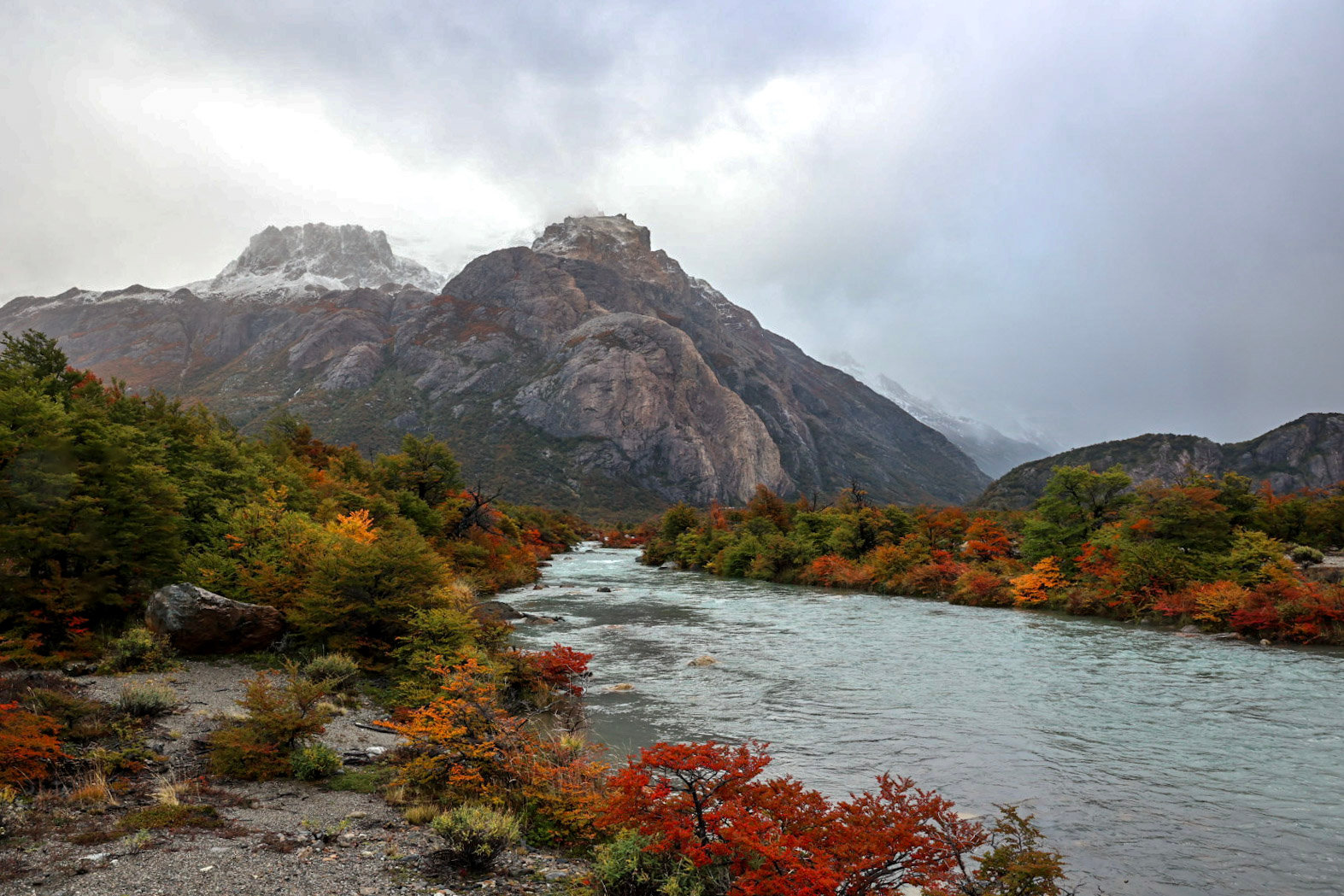
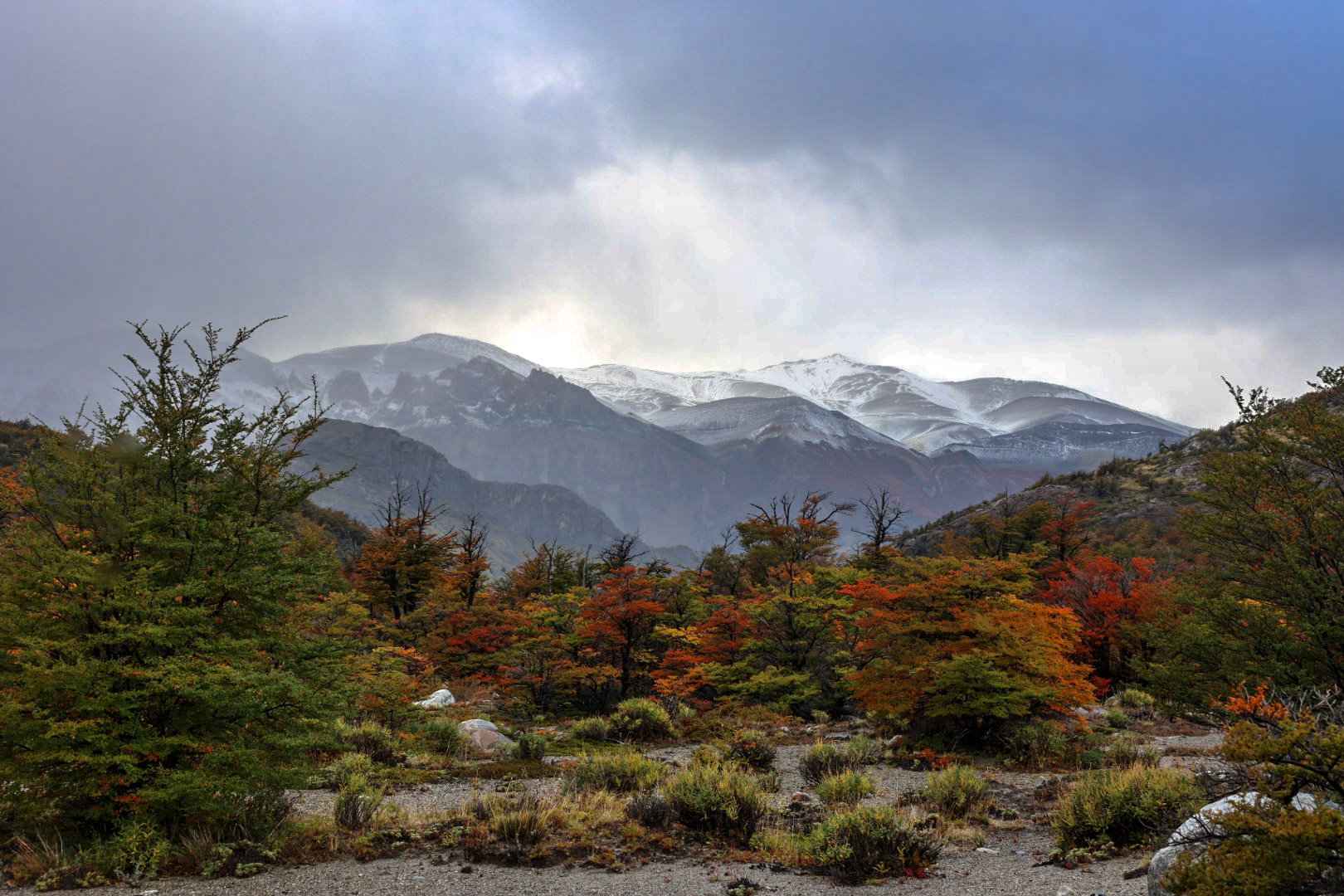
A chuva abrandou, o sol entrou de lado e acendeu a encosta em frente. Por cima das lengas e dos ñires, já vermelhos do Outono, ficou um arco-íris encostado à montanha. Durou pouco. Aqui tudo dura pouco, menos a pedra.
We had not even got out of the van when a huemul appeared. I have no photograph to prove it.
The huemul (Hippocamelus bisulcus) is the deer of the southern Andes and one of the most endangered mammals in the Americas. Some 1,500 are left in the whole world, spread across small isolated groups between Argentina and Chile. In Argentina it is a National Natural Monument. Around here, sightings have been increasing since cattle were removed from this part of the park, in 2007: sometimes it is enough to give it its space back. Facu (short for Facundo), one of the mountain guides walking with us, told us that, in four years around here, he had seen a huemul once or twice. We saw one before taking the first step.
Some days begin like that and you no longer know what else to ask for. Patagonia answered with a rainbow.
The rain eased, the sun came in sideways and lit up the slope ahead. Above the lenga and ñire, already red with autumn, a rainbow leaned against the mountain. It did not last. Nothing lasts long here, except the rock.


III
Abertas / Breaks in the cloud
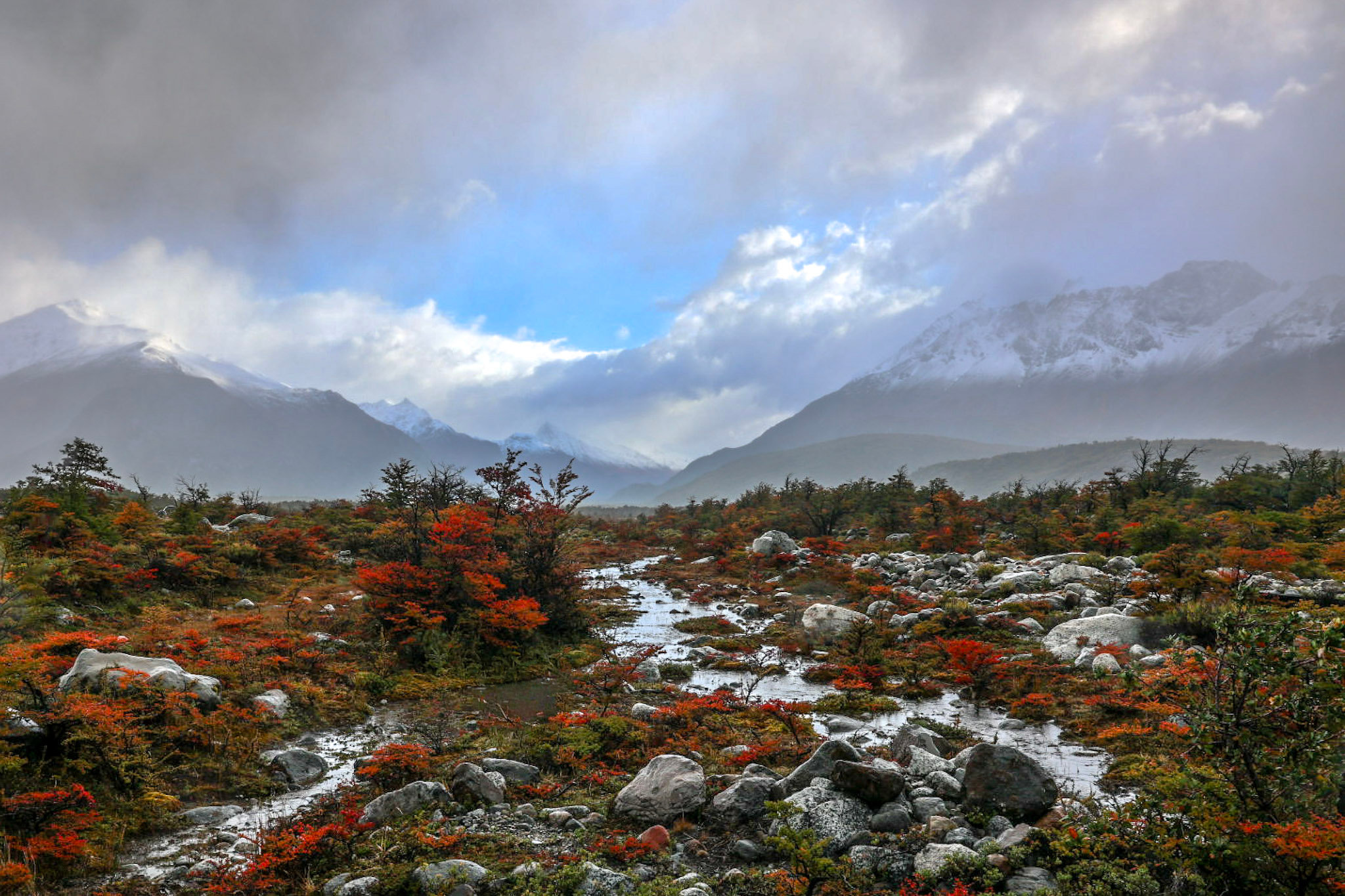
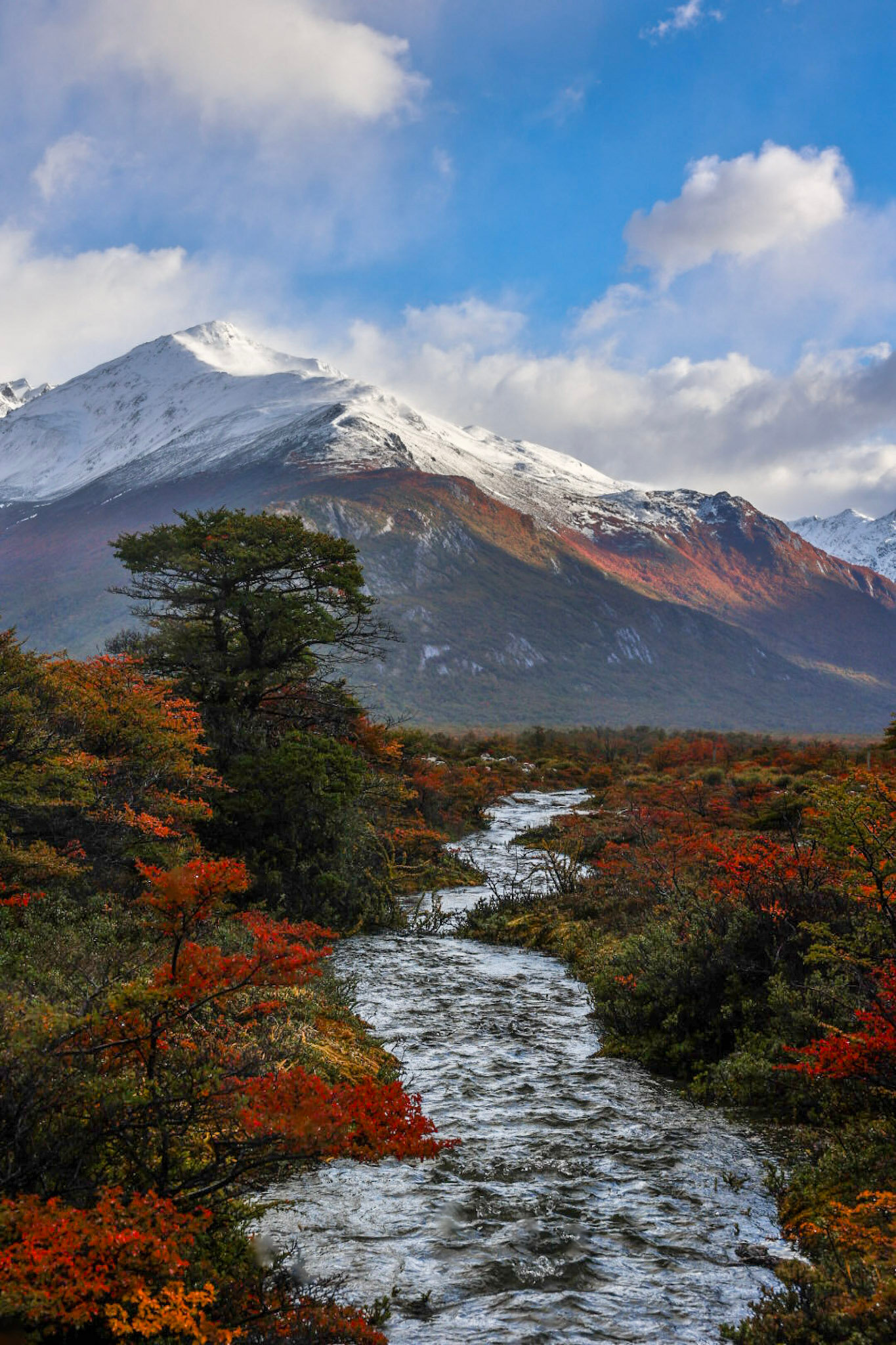
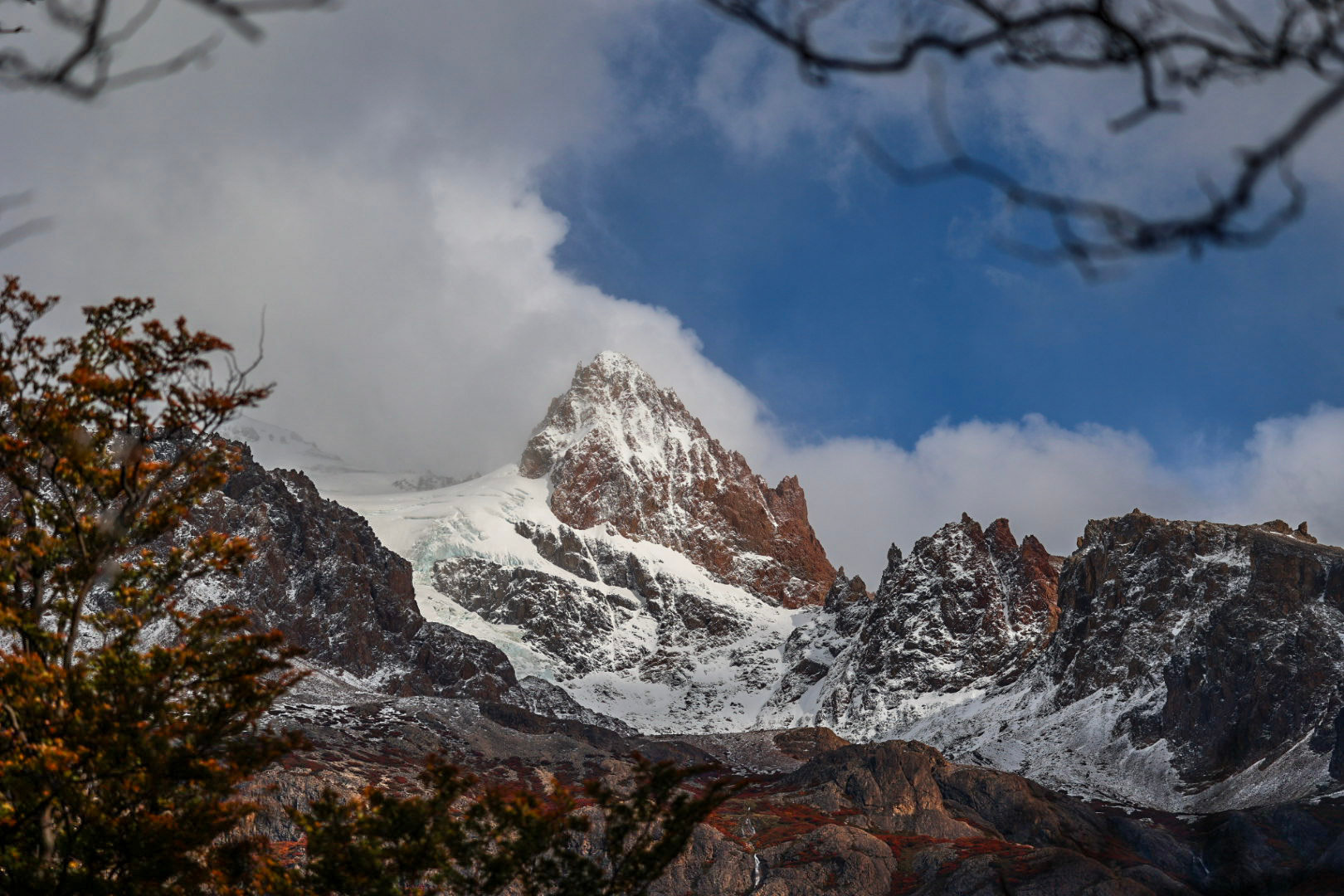
Depois vieram as abertas. Um bocado de céu azul, um cume com neve a aparecer e a desaparecer, um ribeiro a correr entre pedras e arbustos cor de fogo.
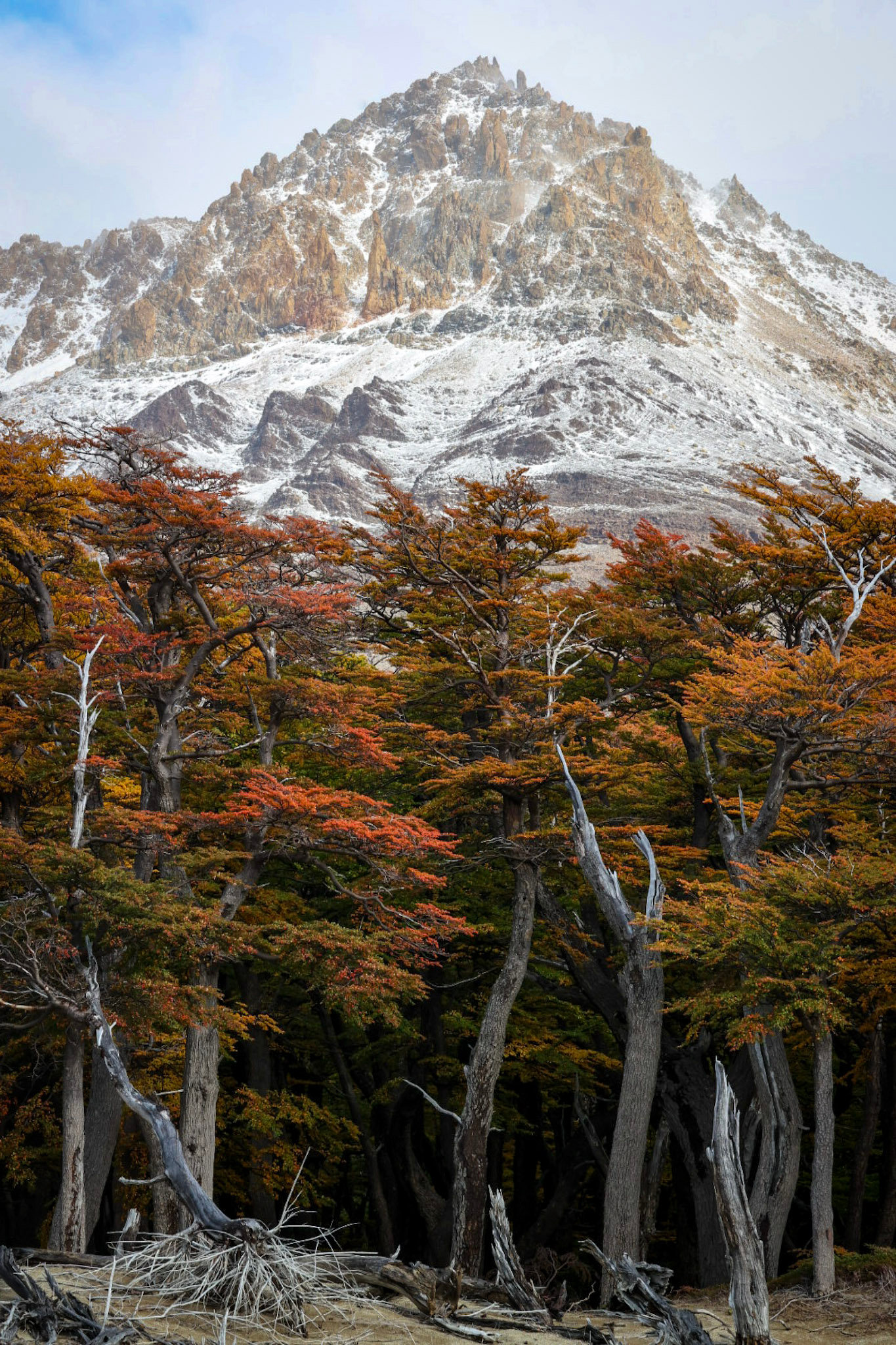
A lenga (Nothofagus pumilio) e o ñire (Nothofagus antarctica) são as faias do sul, as árvores que seguram estas encostas. No Outono passam do verde ao amarelo, ao laranja e a um vermelho que parece exagero de fotógrafo. Não é. É mesmo assim.
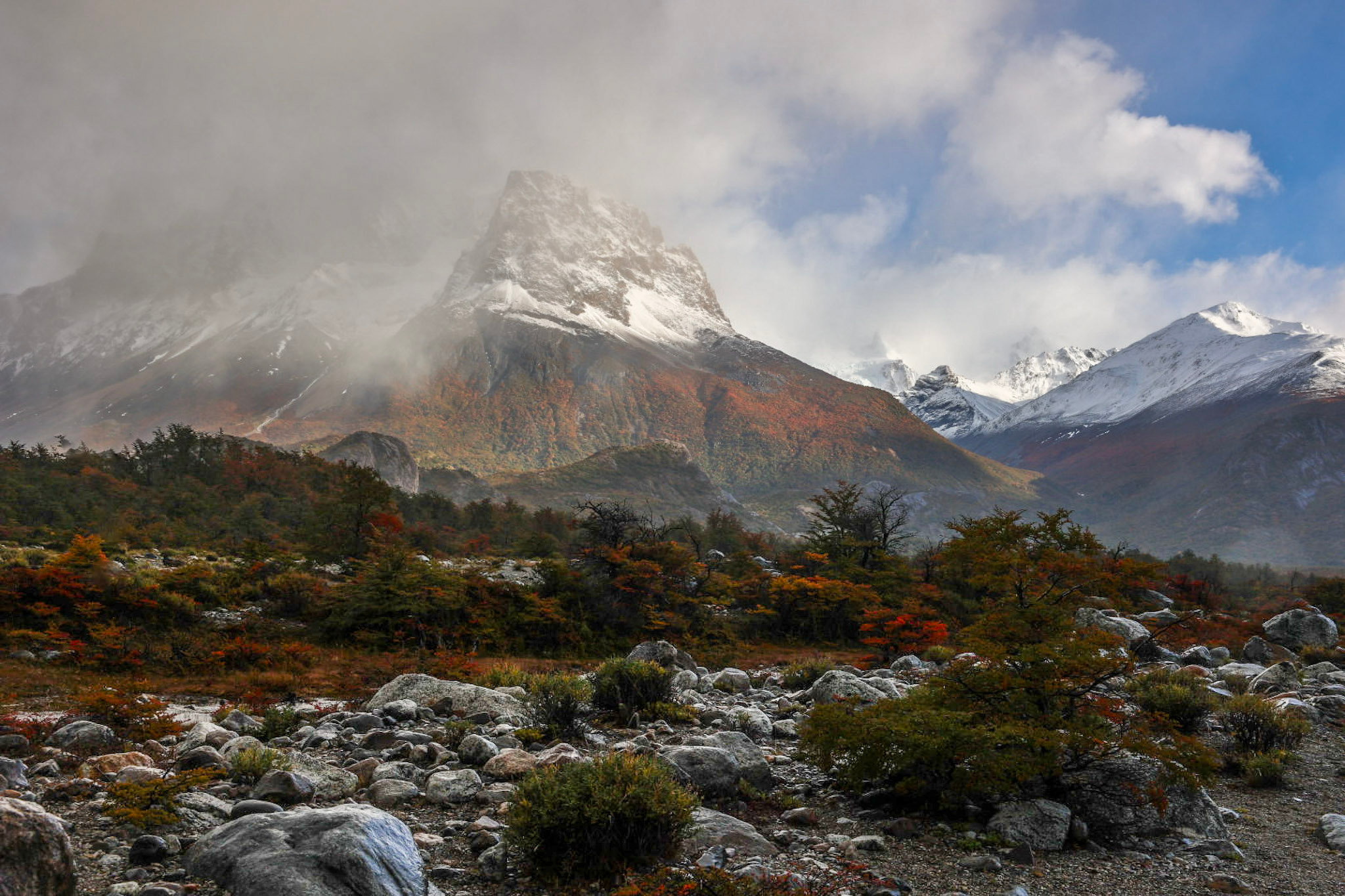
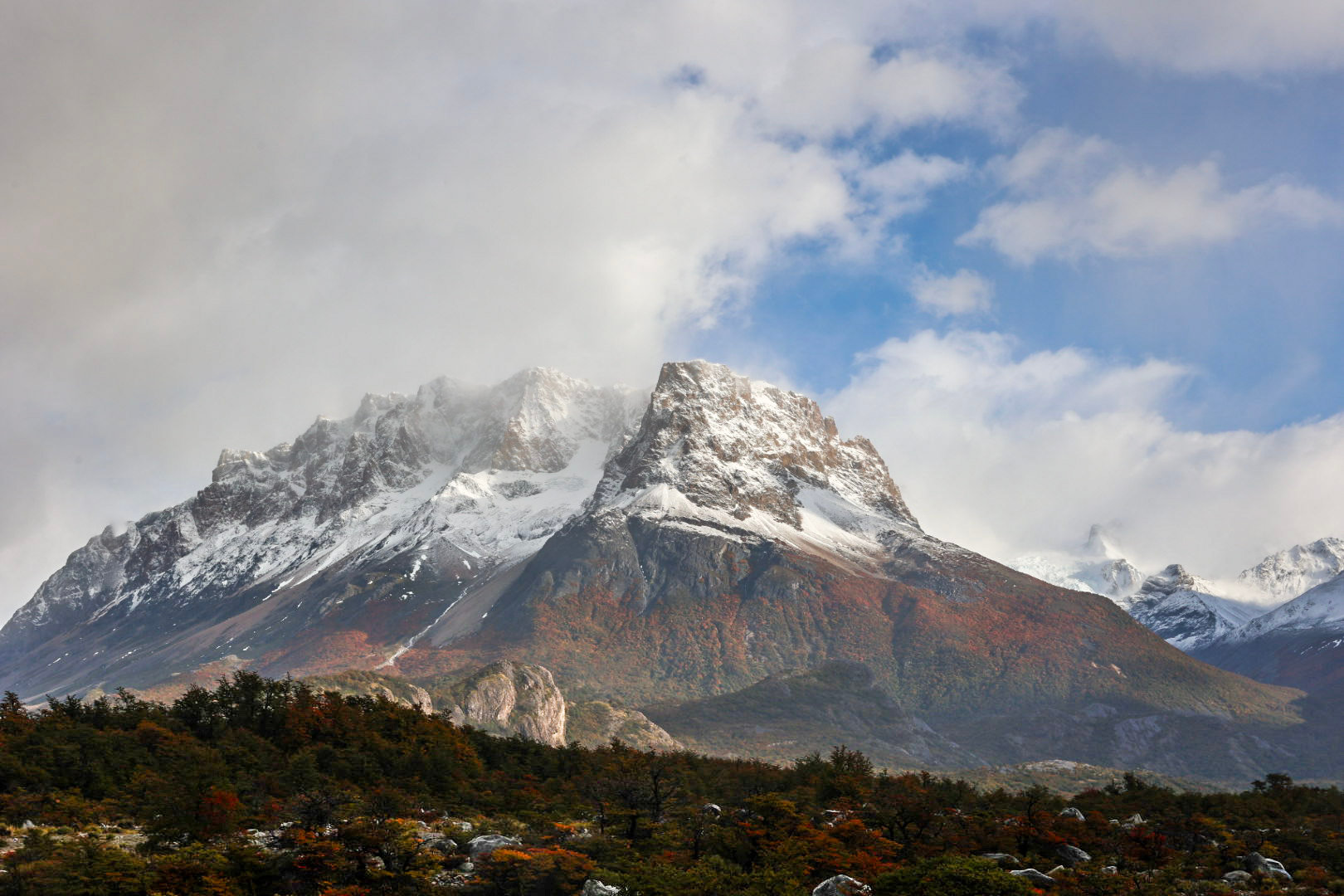
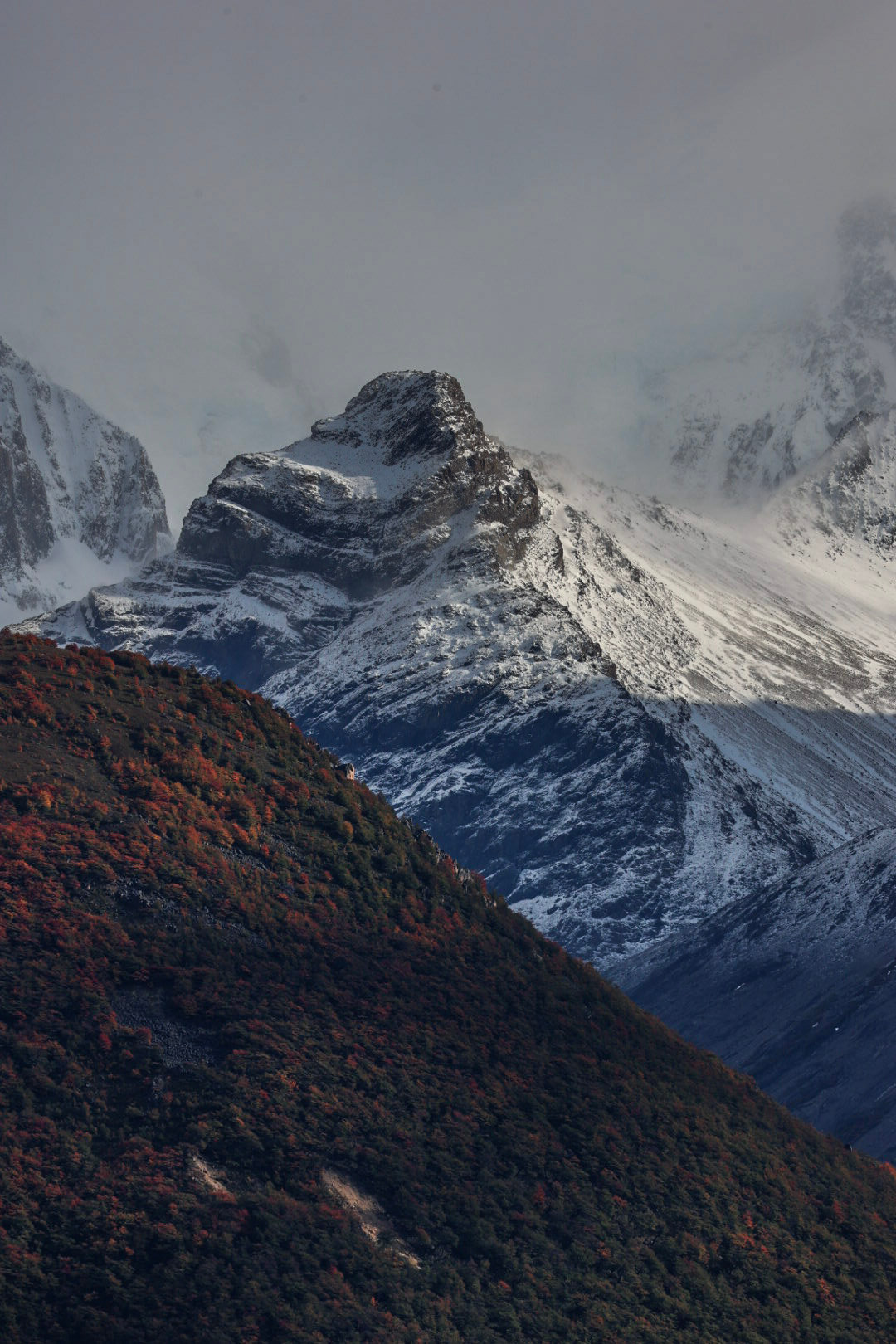
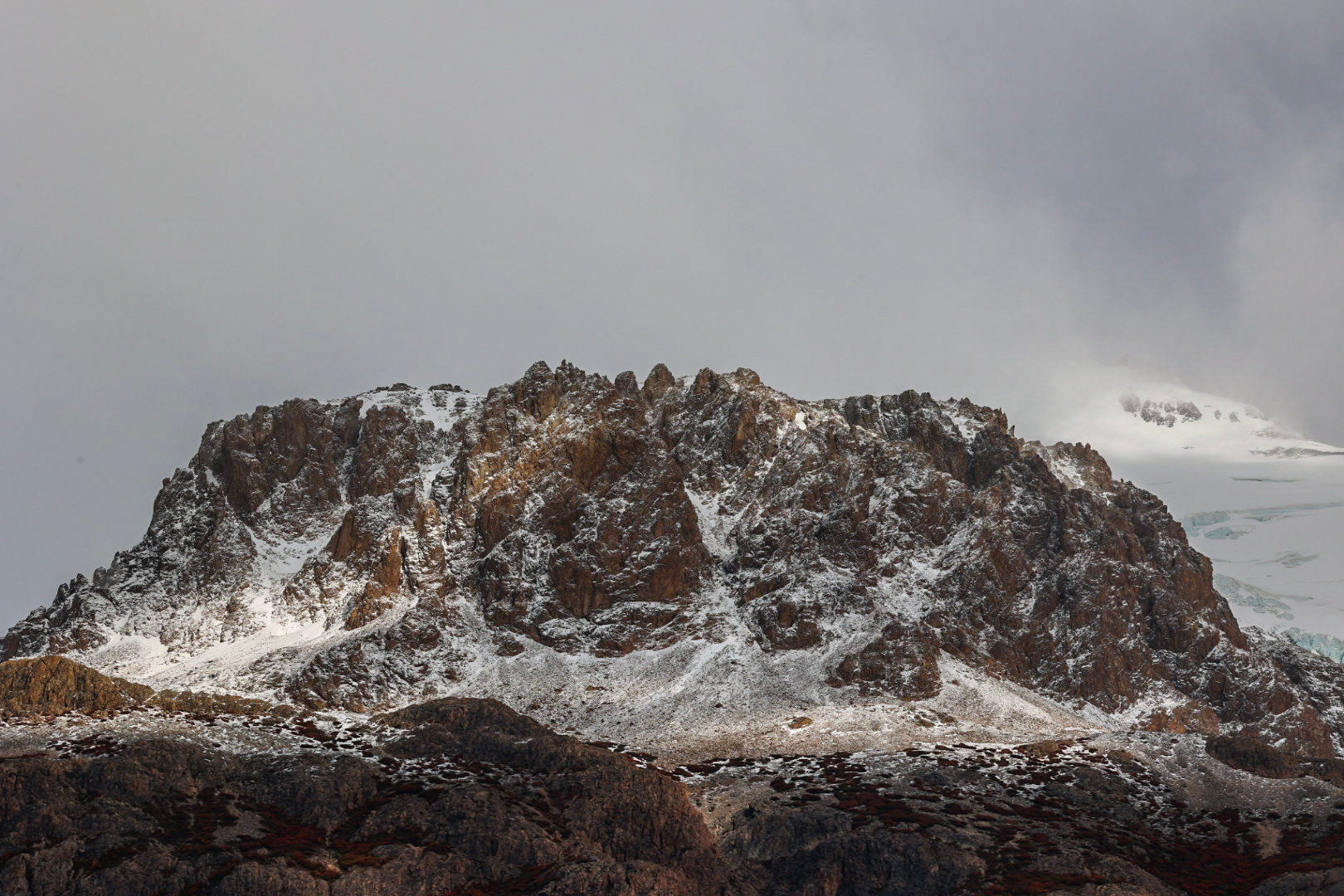
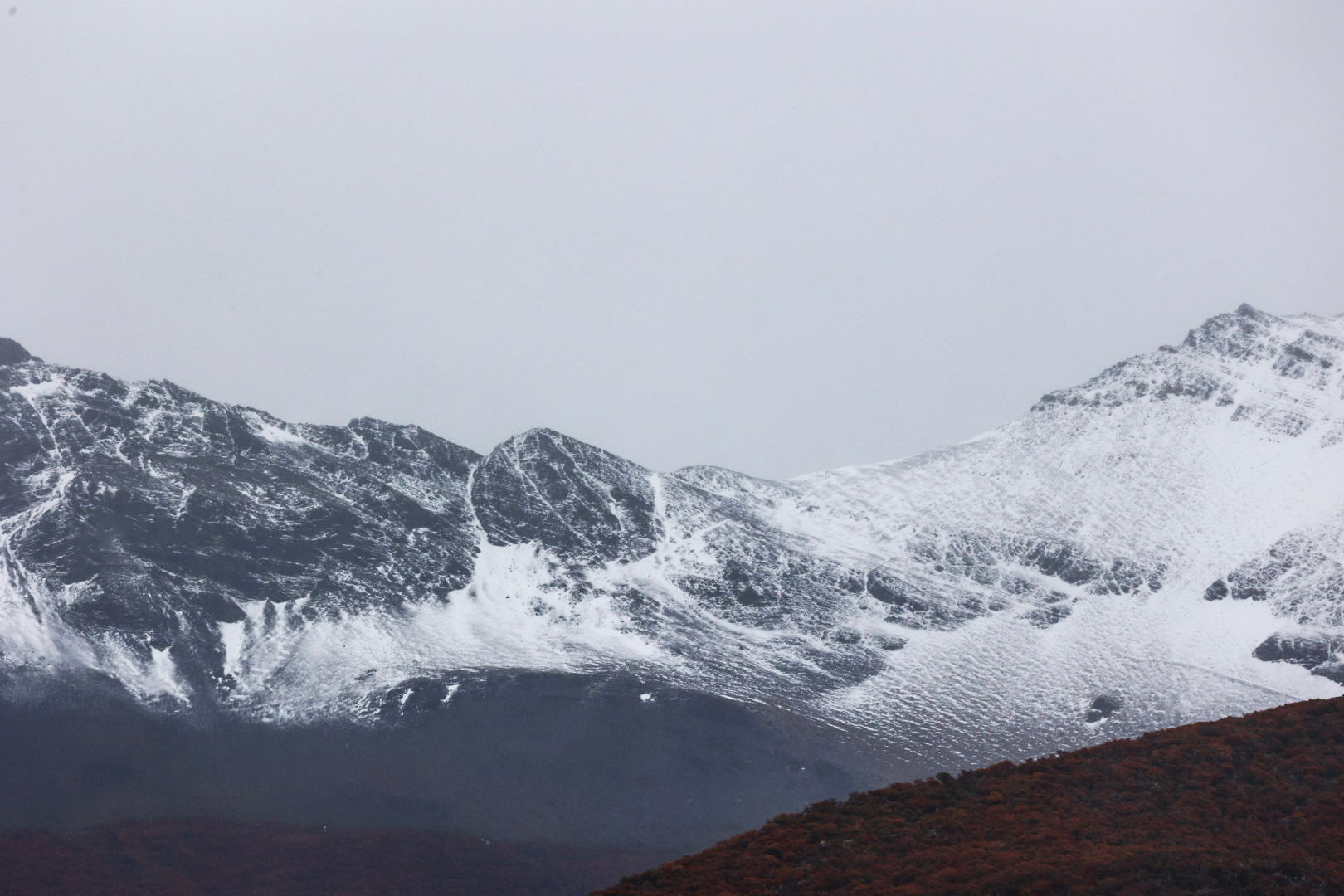
E logo a seguir fechava tudo outra vez. Nuvens baixas, as montanhas a cinzento e branco, a neve a descer pelas encostas. Em meia hora, o mesmo vale parecia outro país.
Then came the breaks in the cloud. A patch of blue sky, a snowy summit appearing and disappearing, a stream running between stones and fire-coloured bushes.
Lenga (Nothofagus pumilio) and ñire (Nothofagus antarctica) are the southern beeches, the trees that hold these slopes together. In autumn they go from green to yellow, to orange and to a red that looks like a photographer’s exaggeration. It is not. It really is like that.
And right after, everything closed in again. Low clouds, the mountains in grey and white, snow coming down the slopes. In half an hour, the same valley looked like another country.




IV
A floresta e o gelo / The forest and the ice
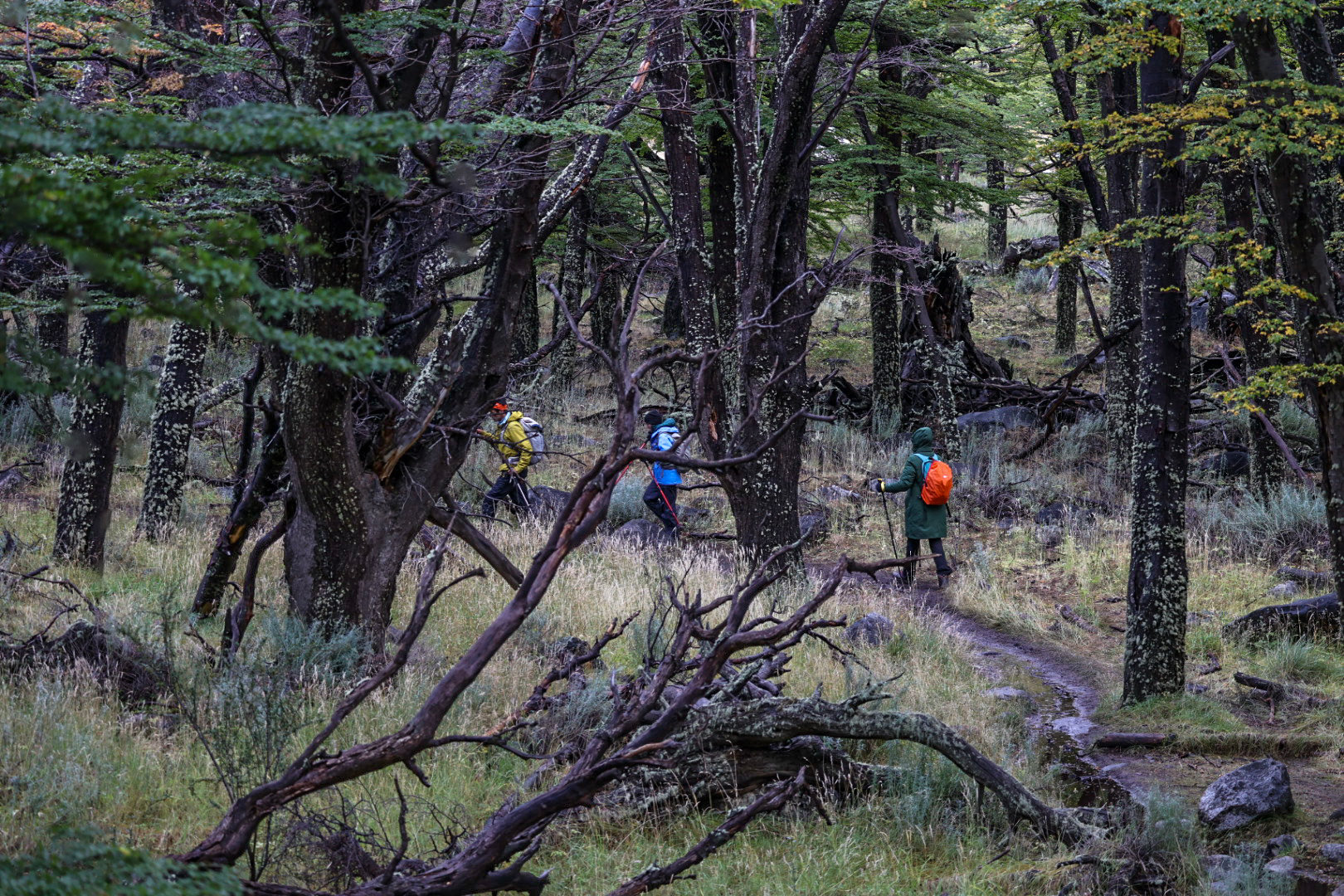
O trilho mete-se pela floresta de lengas, e a floresta tem a sua gente. Num tronco, um casal de pica-paus-de-magalhães (Campephilus magellanicus), o maior pica-pau da América do Sul: ele de cabeça vermelha, ela de negro.
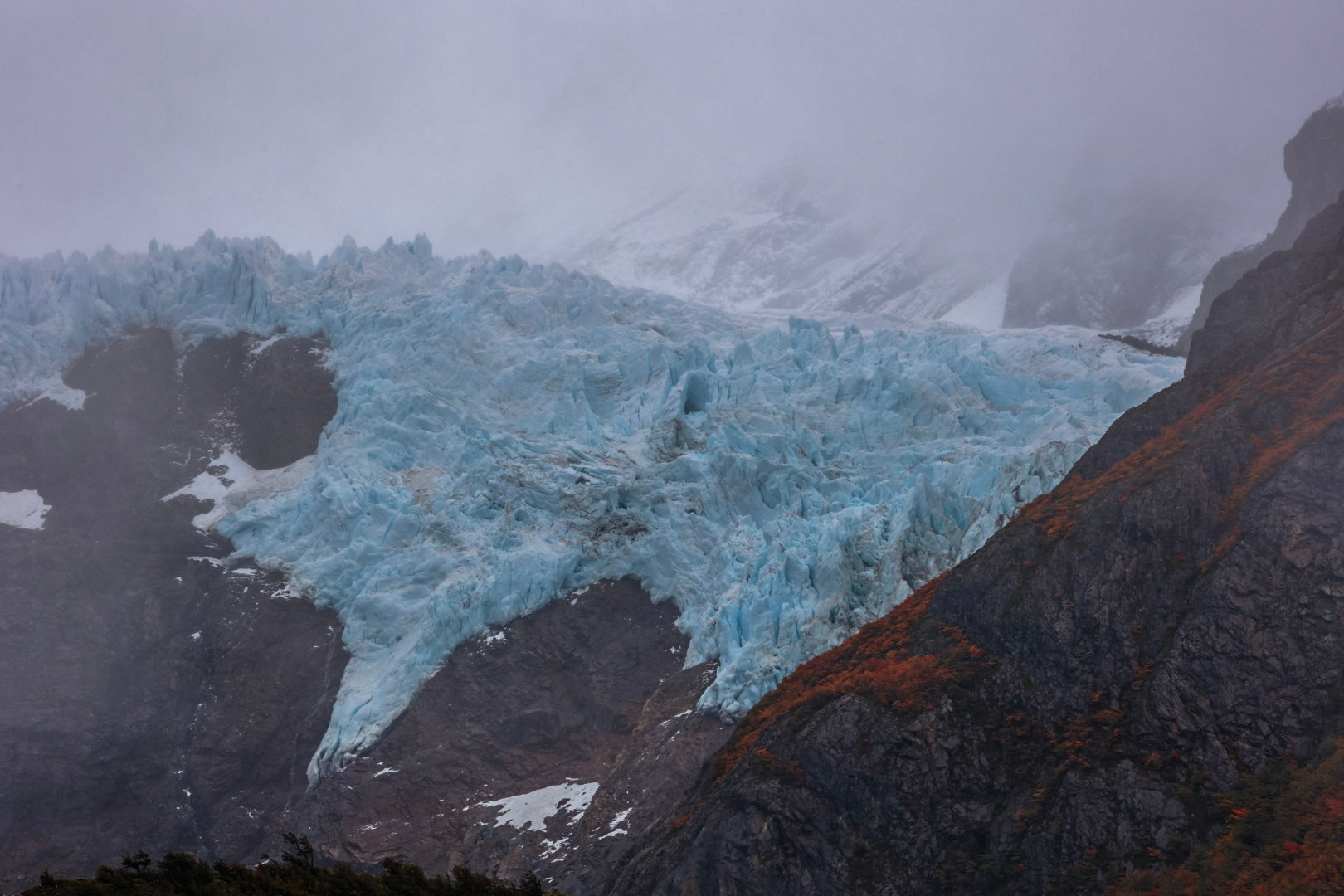
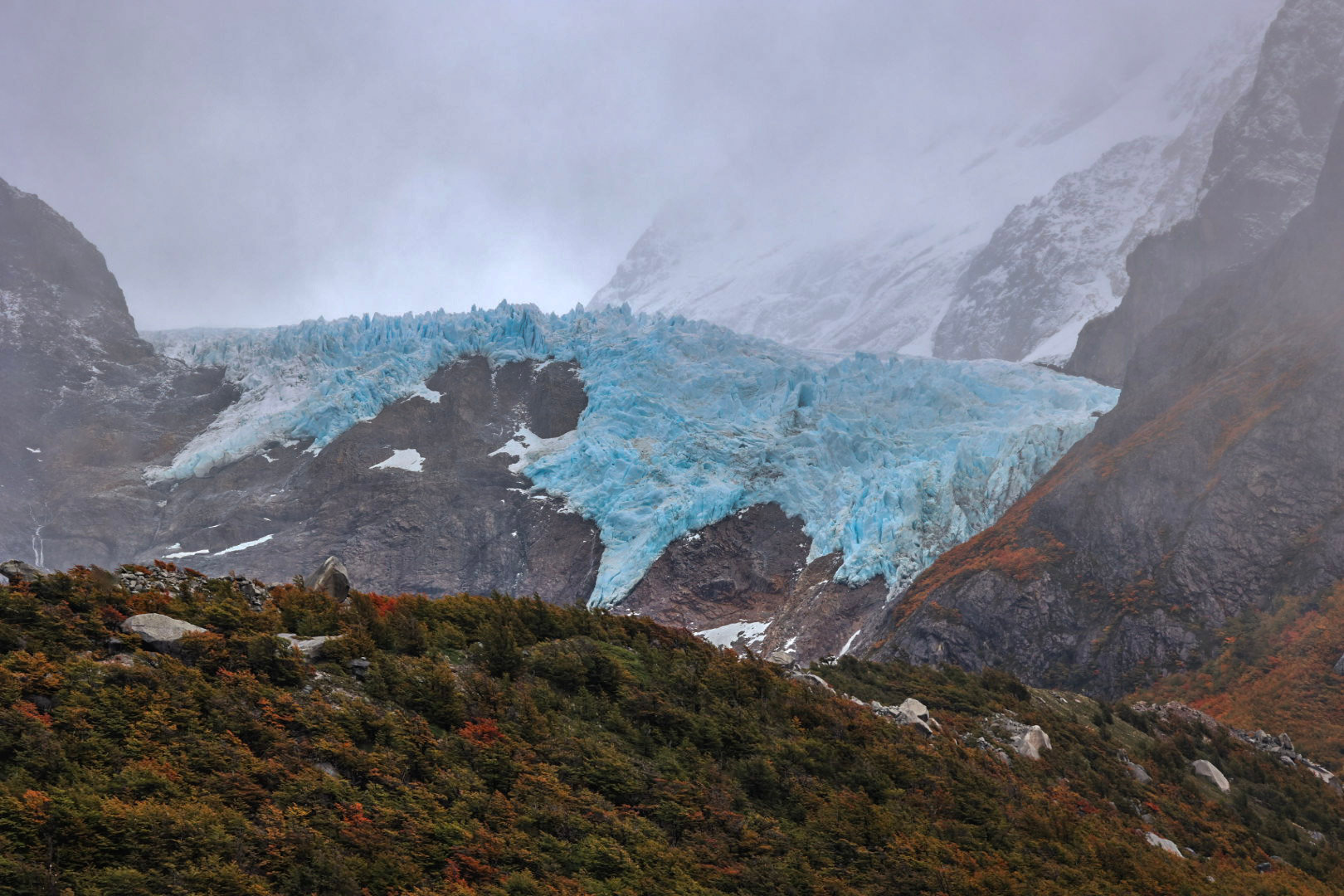
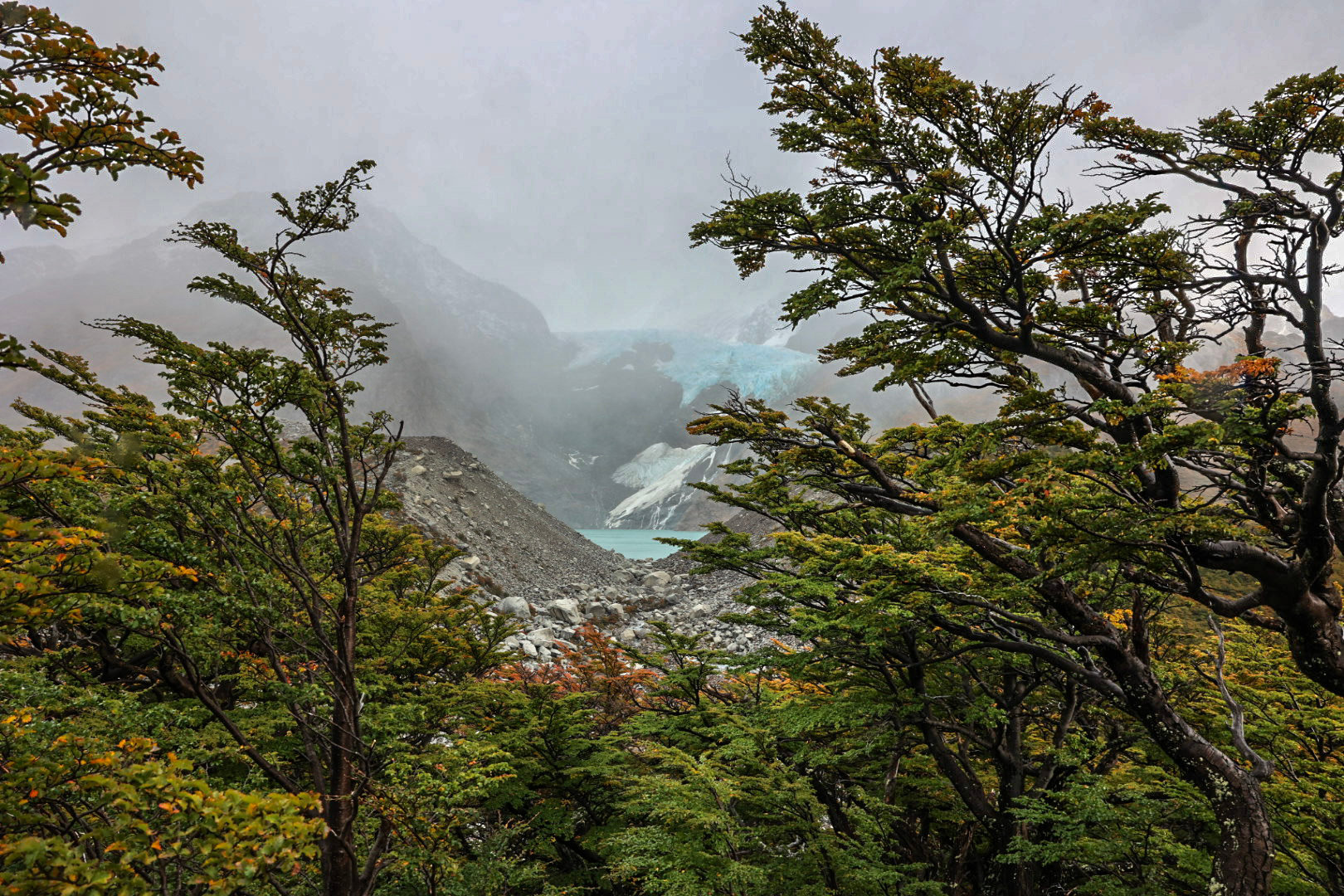
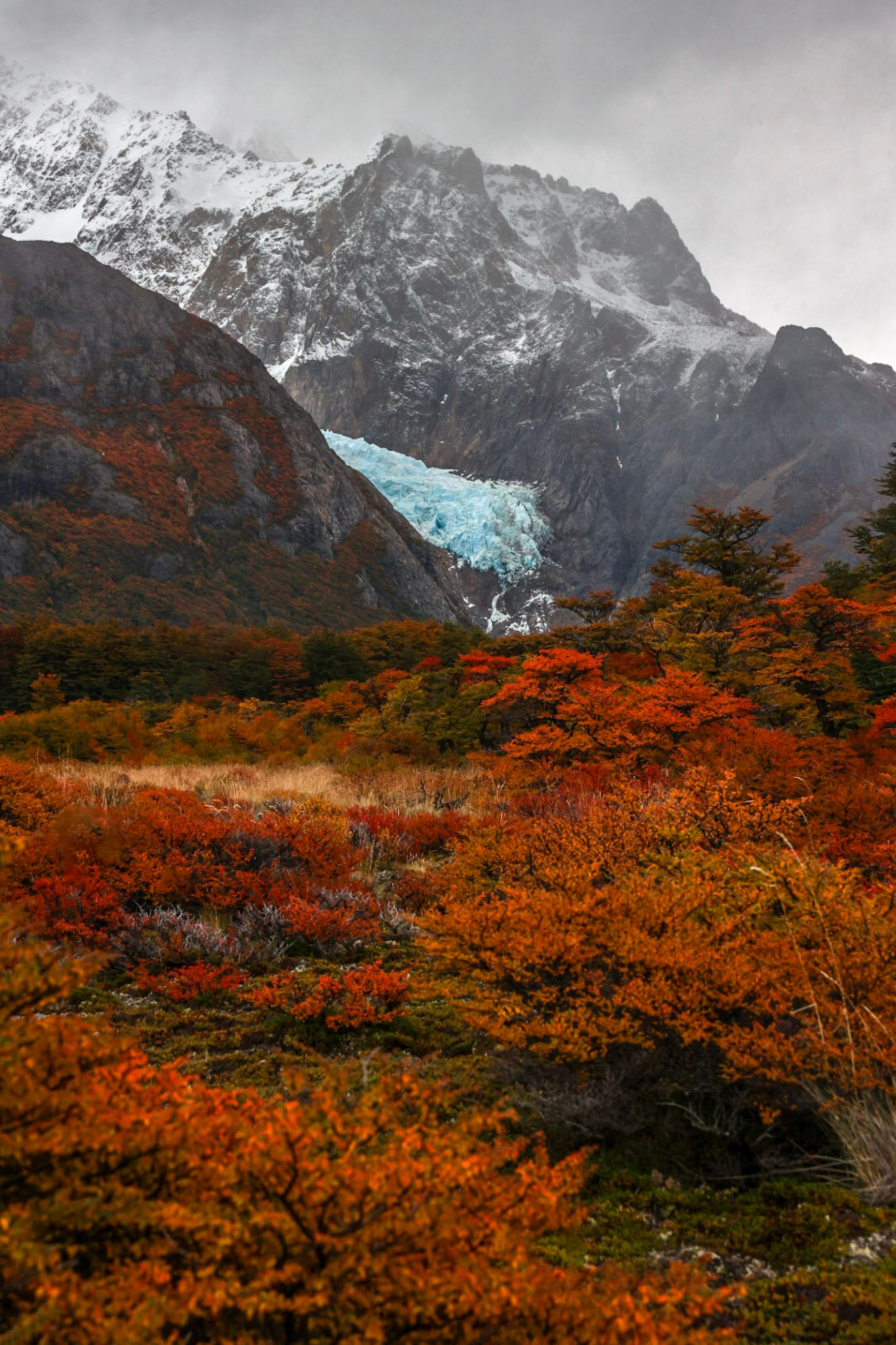
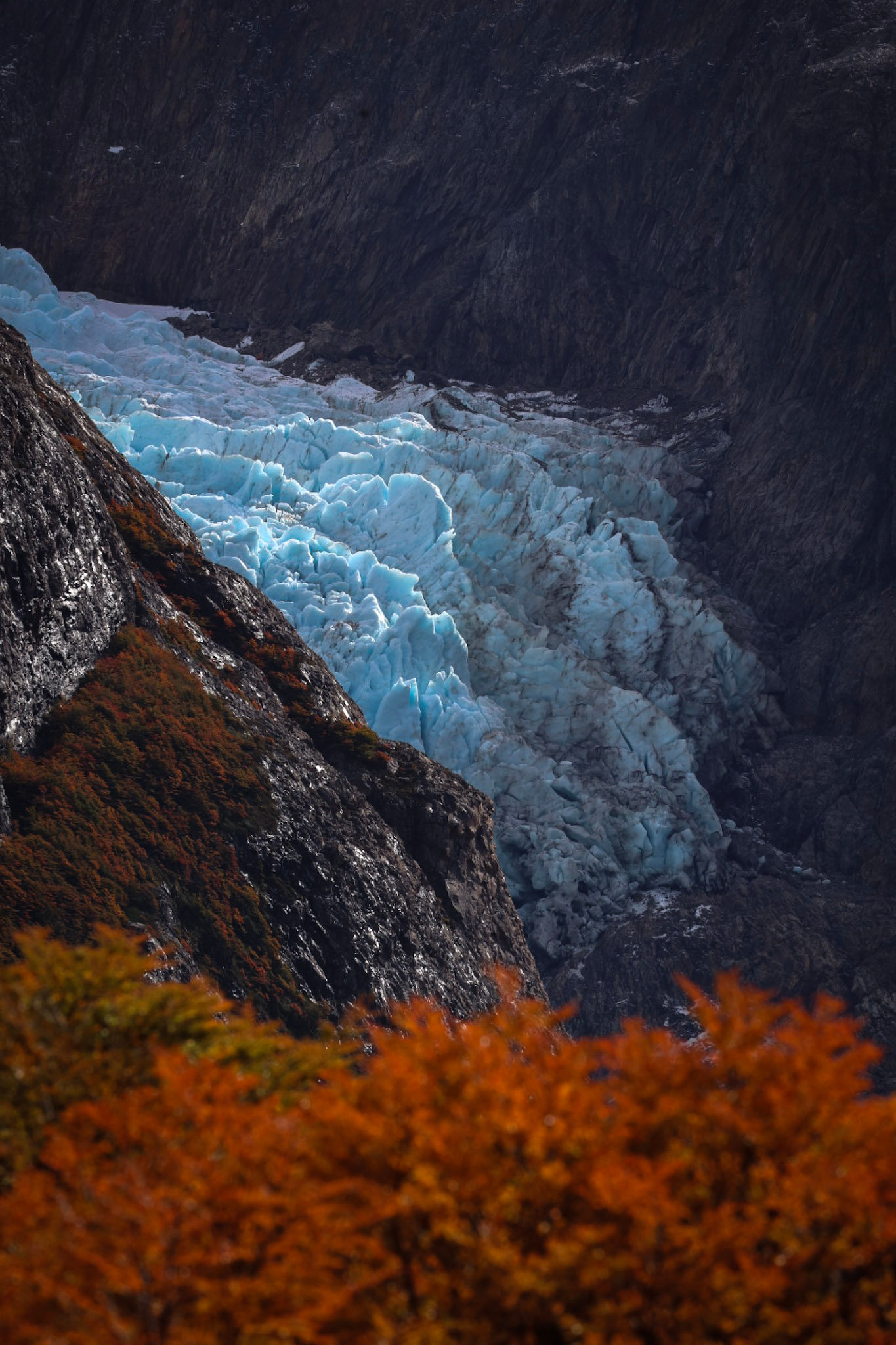
Mais acima, entre os ramos, aparece o glaciar Piedras Blancas. Uma língua de gelo azul pendurada na montanha, meio escondida na neblina. É difícil explicar a escala: o gelo parece perto e está do outro lado do vale, parece parado e está a descer há milhares de anos.
E não é só paisagem. Um glaciar é água guardada: é deste gelo que nascem os rios que descem para a estepe.
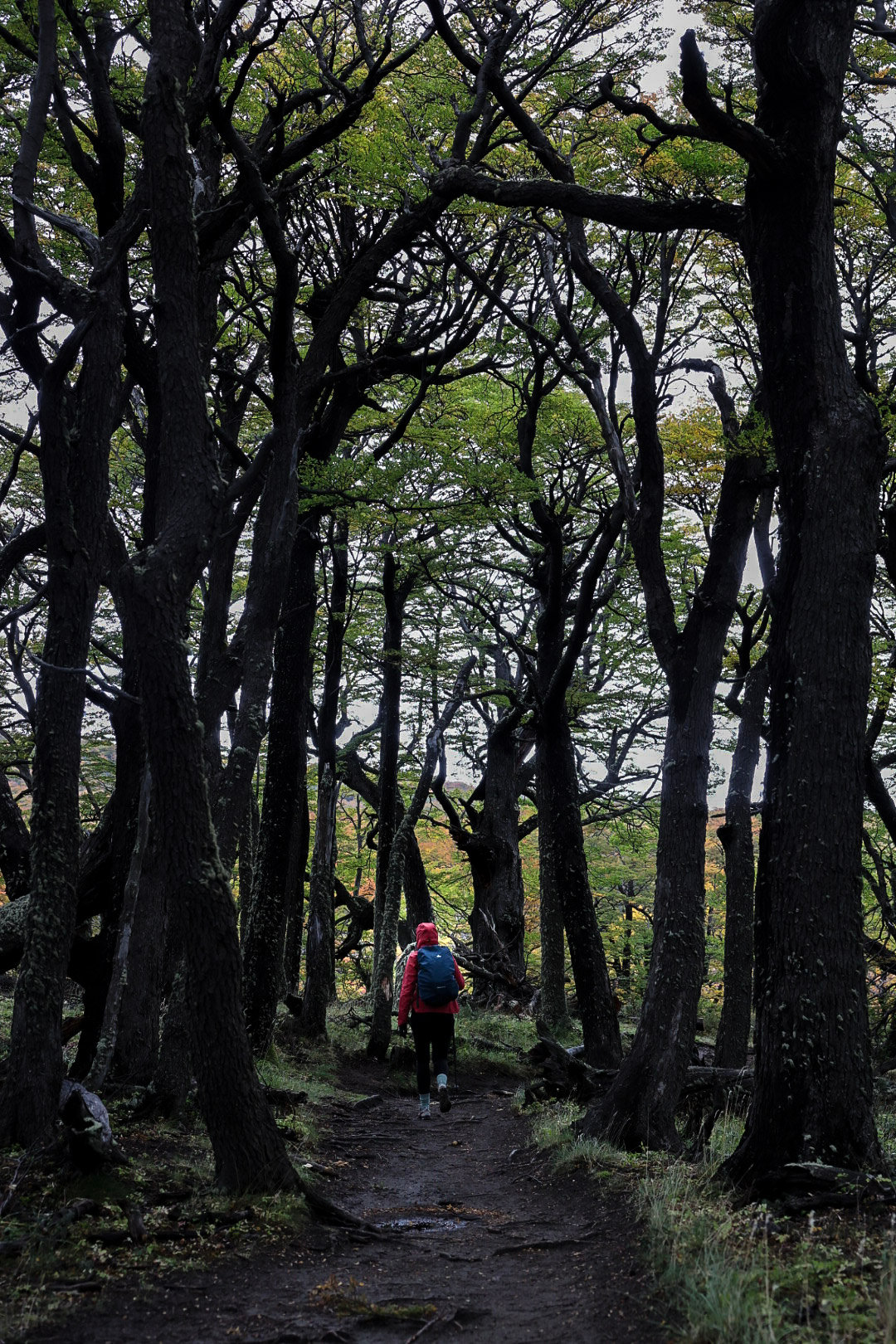
Uma placa de madeira avisa: Senda El Pilar, km 3 de 5. Lá dentro, entre troncos escuros da chuva, o caminho é um túnel de folhas.
The trail heads into the lenga forest, and the forest has its own people. On a trunk, a pair of Magellanic woodpeckers (Campephilus magellanicus), the largest woodpecker in South America: he with a red head, she in black.
Higher up, between the branches, the Piedras Blancas glacier appears. A tongue of blue ice hanging from the mountain, half hidden in the mist. The scale is hard to explain: the ice looks close and is on the other side of the valley, looks still and has been coming down for thousands of years.
And it is not just scenery. A glacier is stored water: it is from this ice that the rivers running down to the steppe are born.
A wooden sign announces: Senda El Pilar, km 3 of 5. Inside, between trunks dark with rain, the path is a tunnel of leaves.





V
O Outono todo de uma vez / All of autumn at once
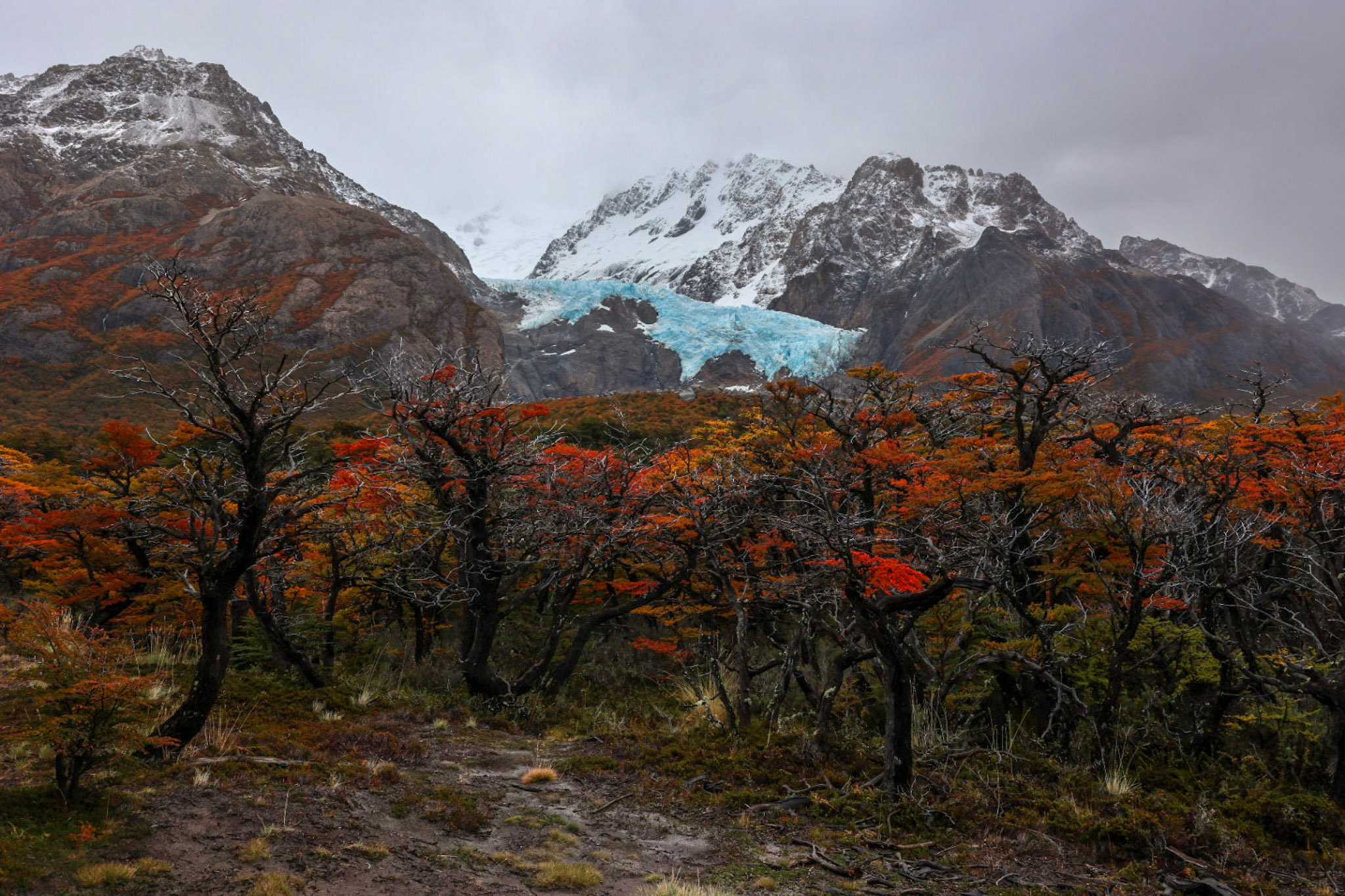
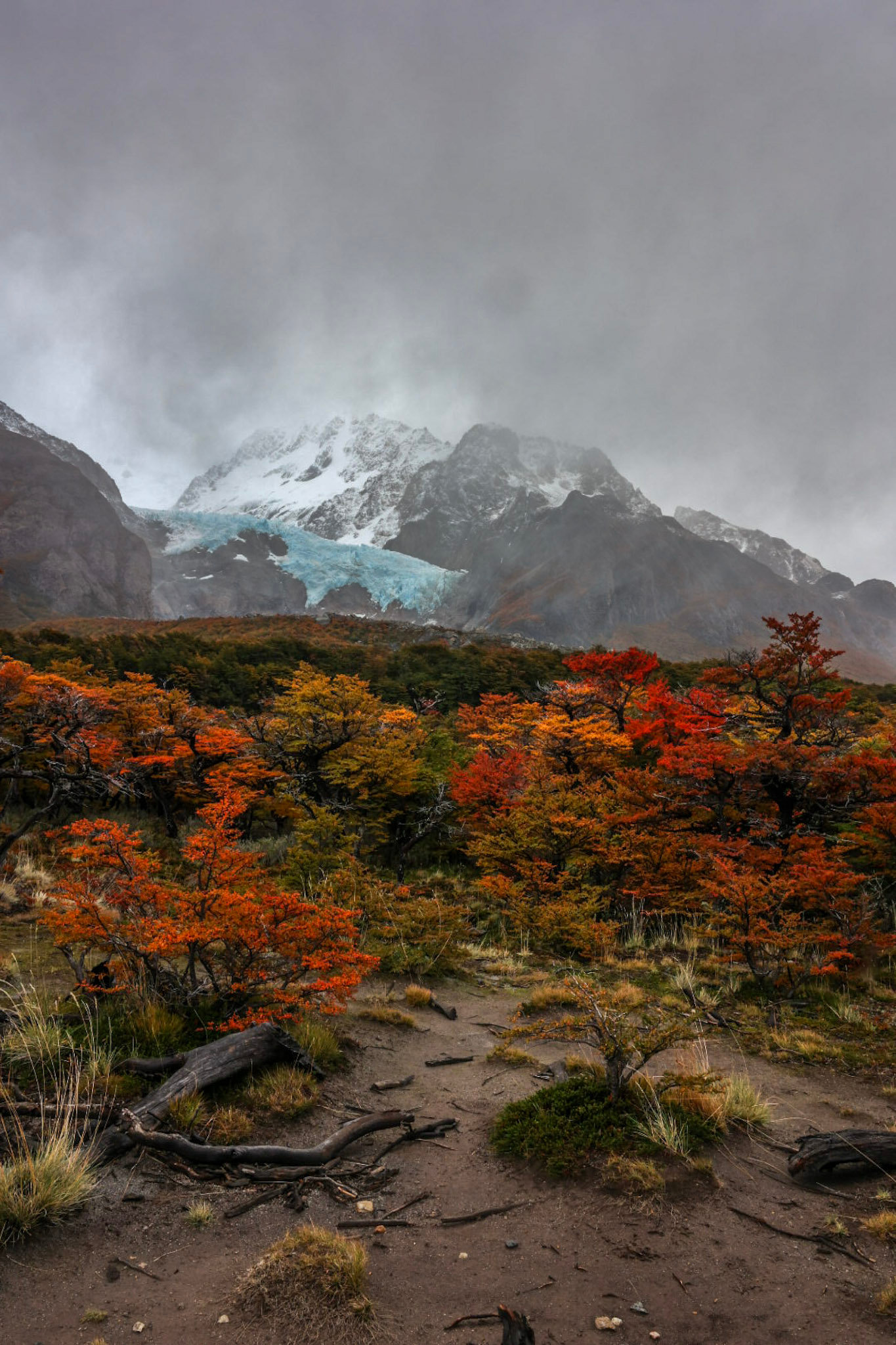
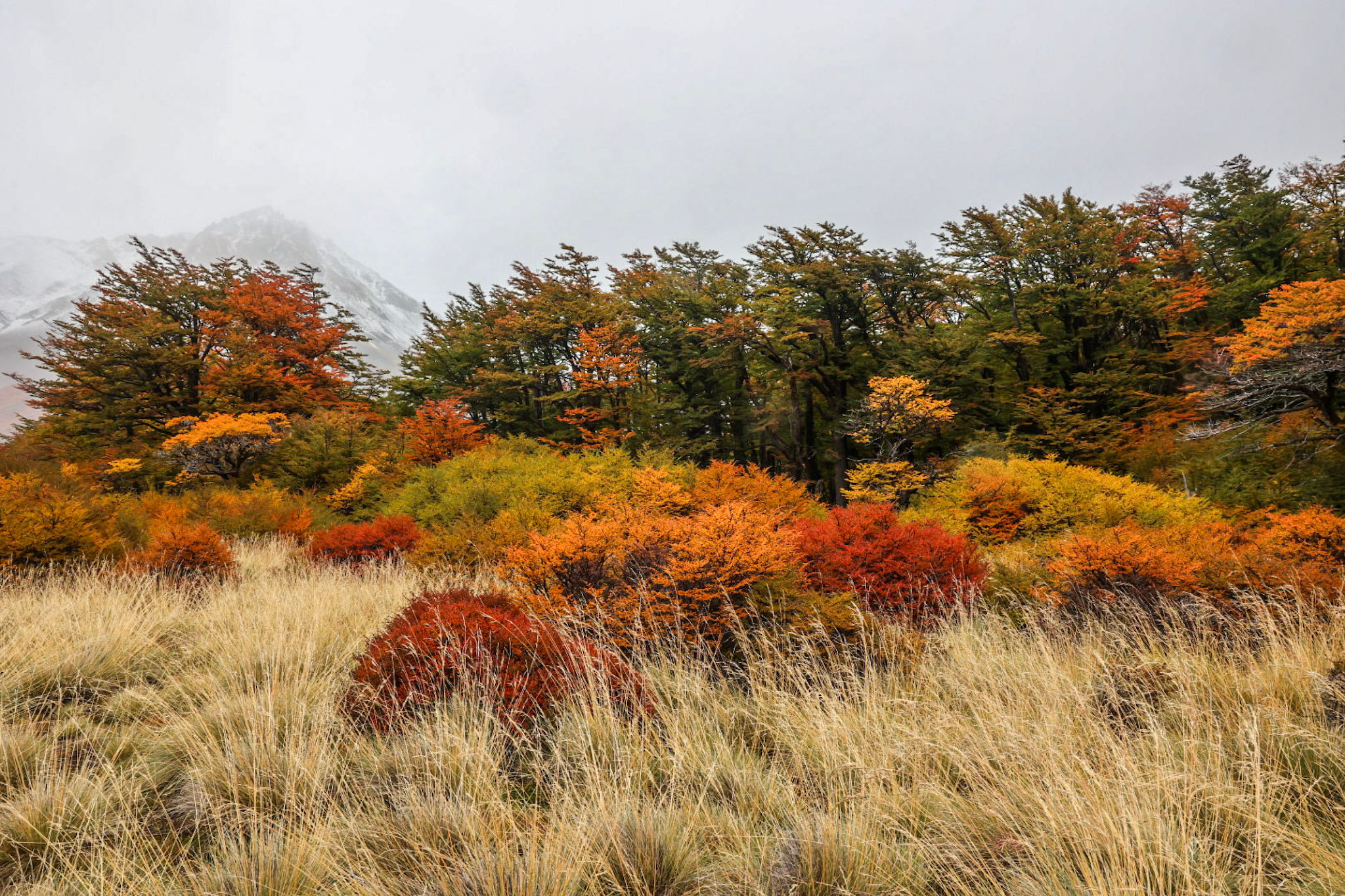
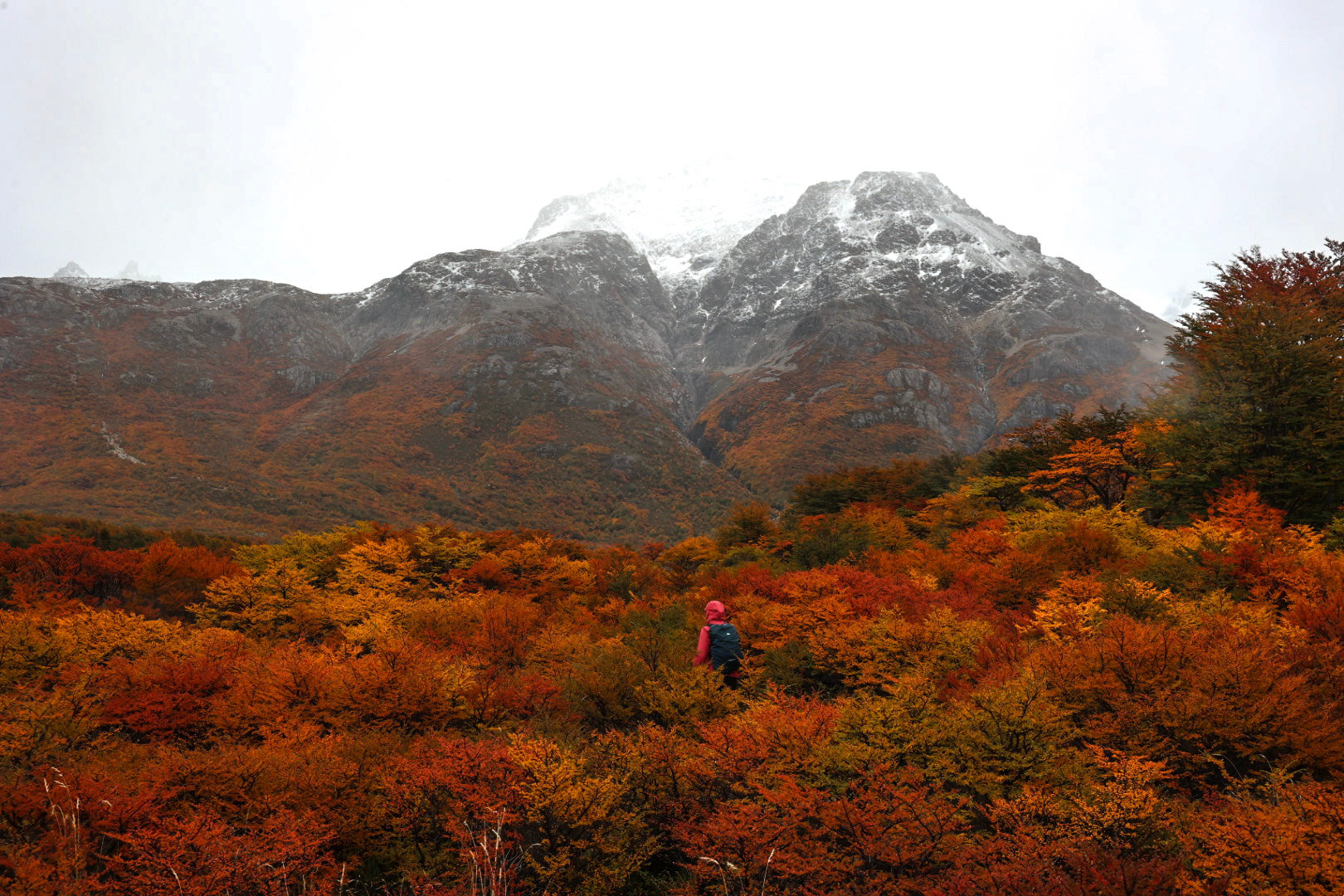
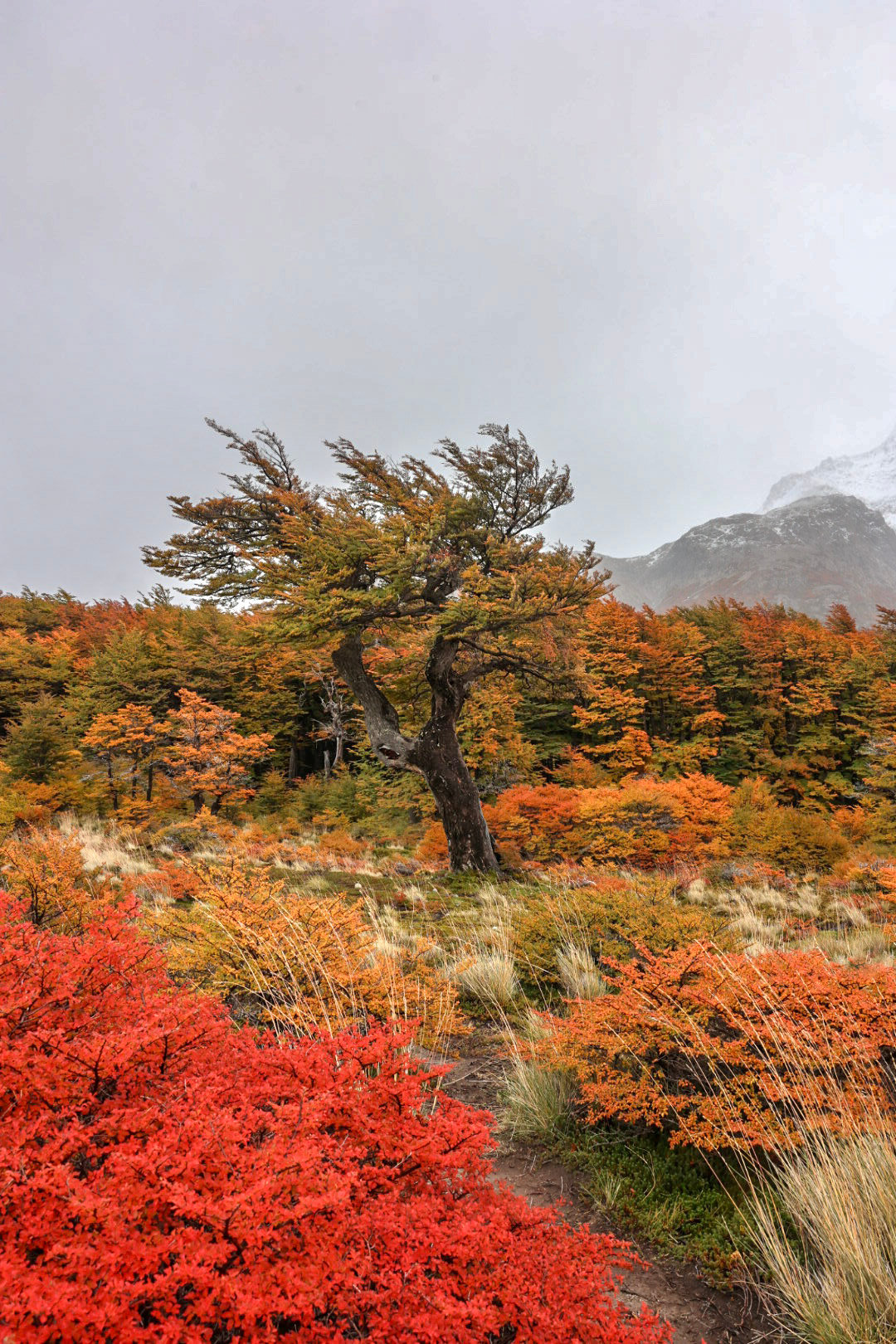
E de repente a floresta abre e fica-se no meio de uma planície a arder. Ñires baixos, de todos os tons entre o amarelo e o vermelho, erva cor de palha e, ao fundo, as montanhas com neve e o glaciar a espreitar.
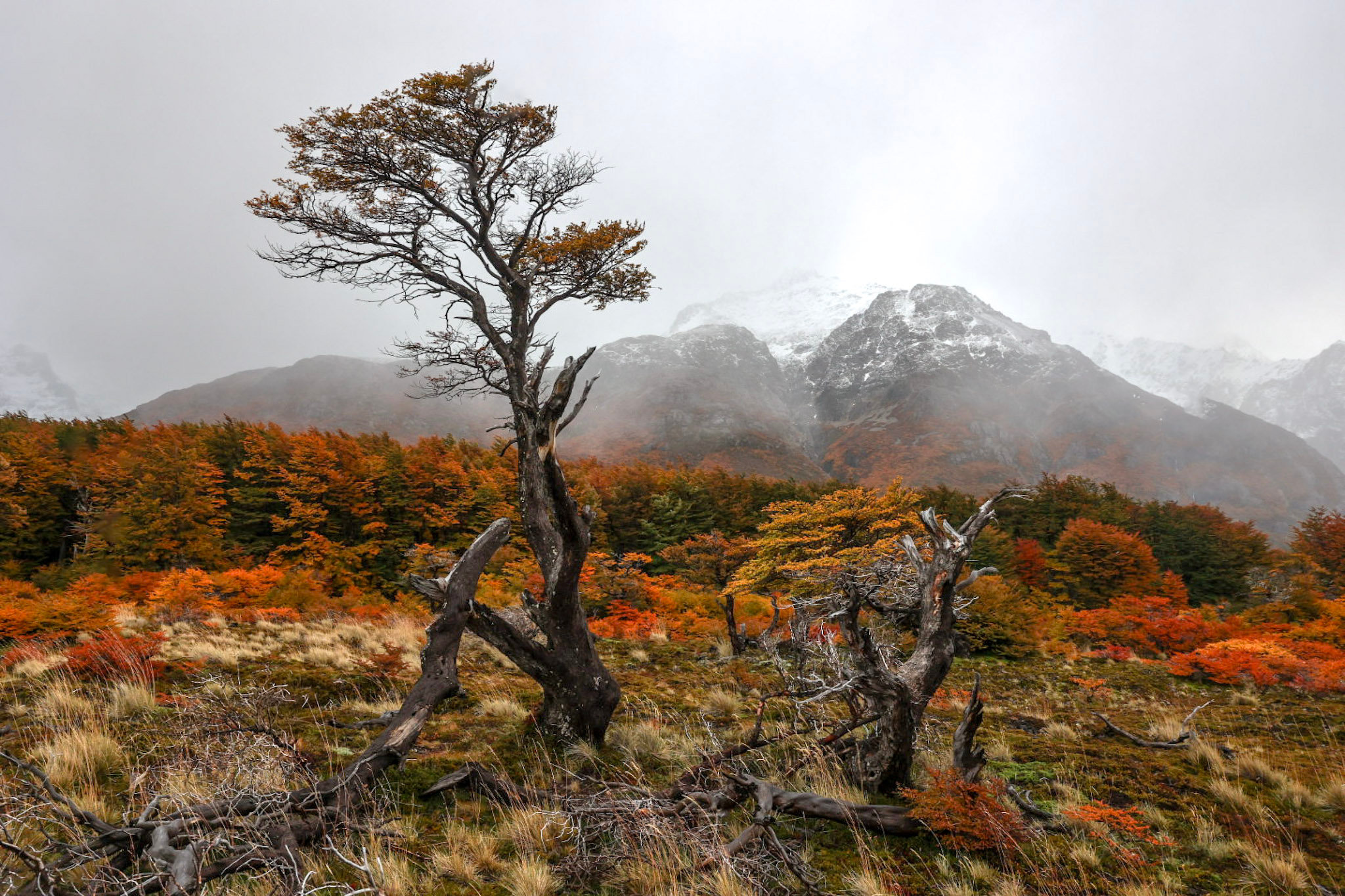
Aqui e ali, uma árvore sozinha, torcida pelo vento, a dizer de que lado ele costuma soprar.
Parei muitas vezes. Não por cansaço, mas por não conseguir seguir em frente sem olhar e fotografar outra vez.
And suddenly the forest opens and you are standing in the middle of a plain on fire. Low ñire in every shade between yellow and red, straw-coloured grass and, in the distance, the snowy mountains with the glacier peeking through.
Here and there, a lone tree, twisted by the wind, telling you which way it usually blows.
I stopped many times. Not out of tiredness, but because I could not go on without looking and photographing once more.



VI
Os donos do trilho / The owners of the trail
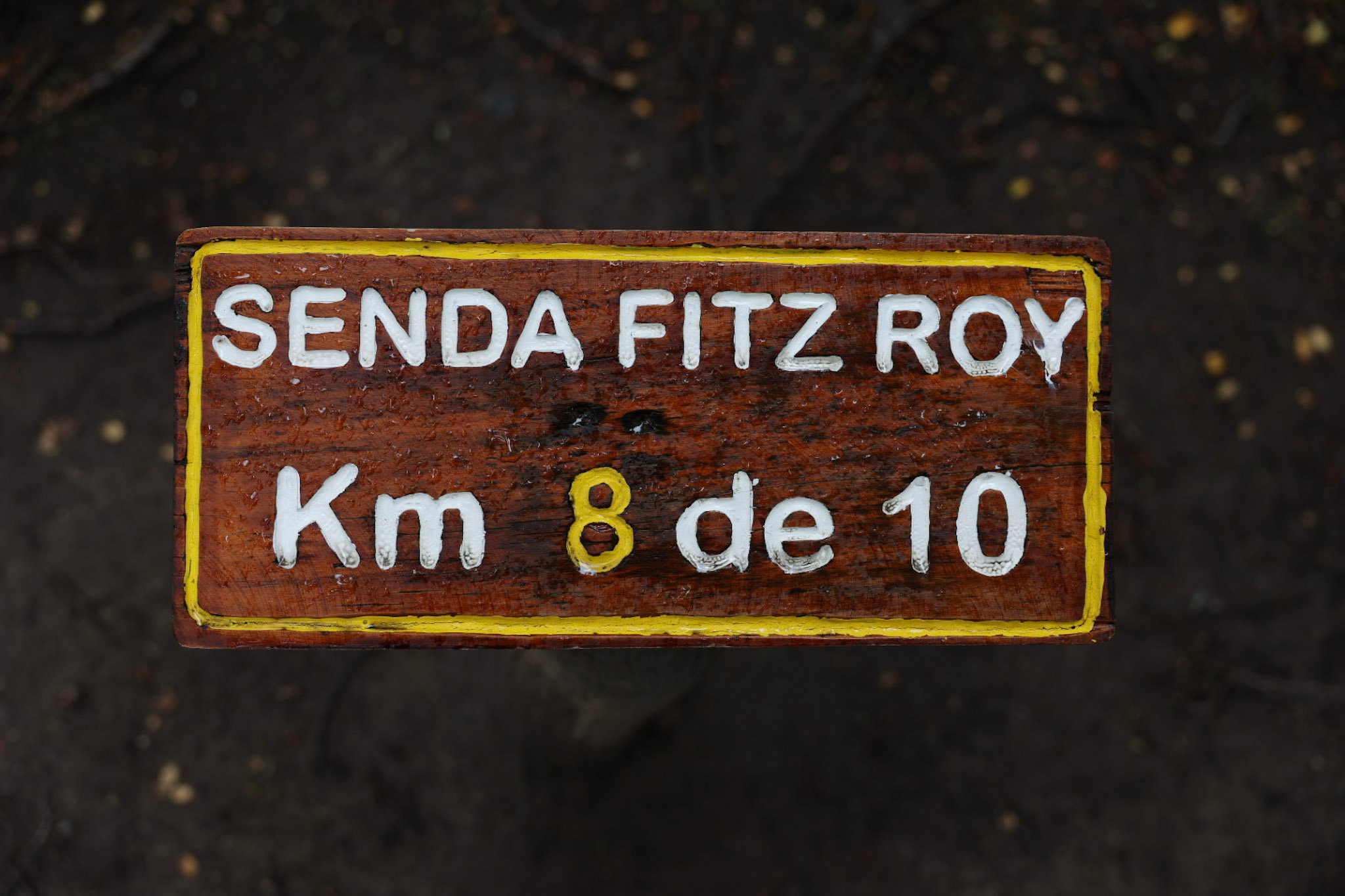
Onde o caminho de El Pilar encontra a Senda Fitz Roy, ao quilómetro 8 de 10, estavam à nossa espera os donos do sítio.
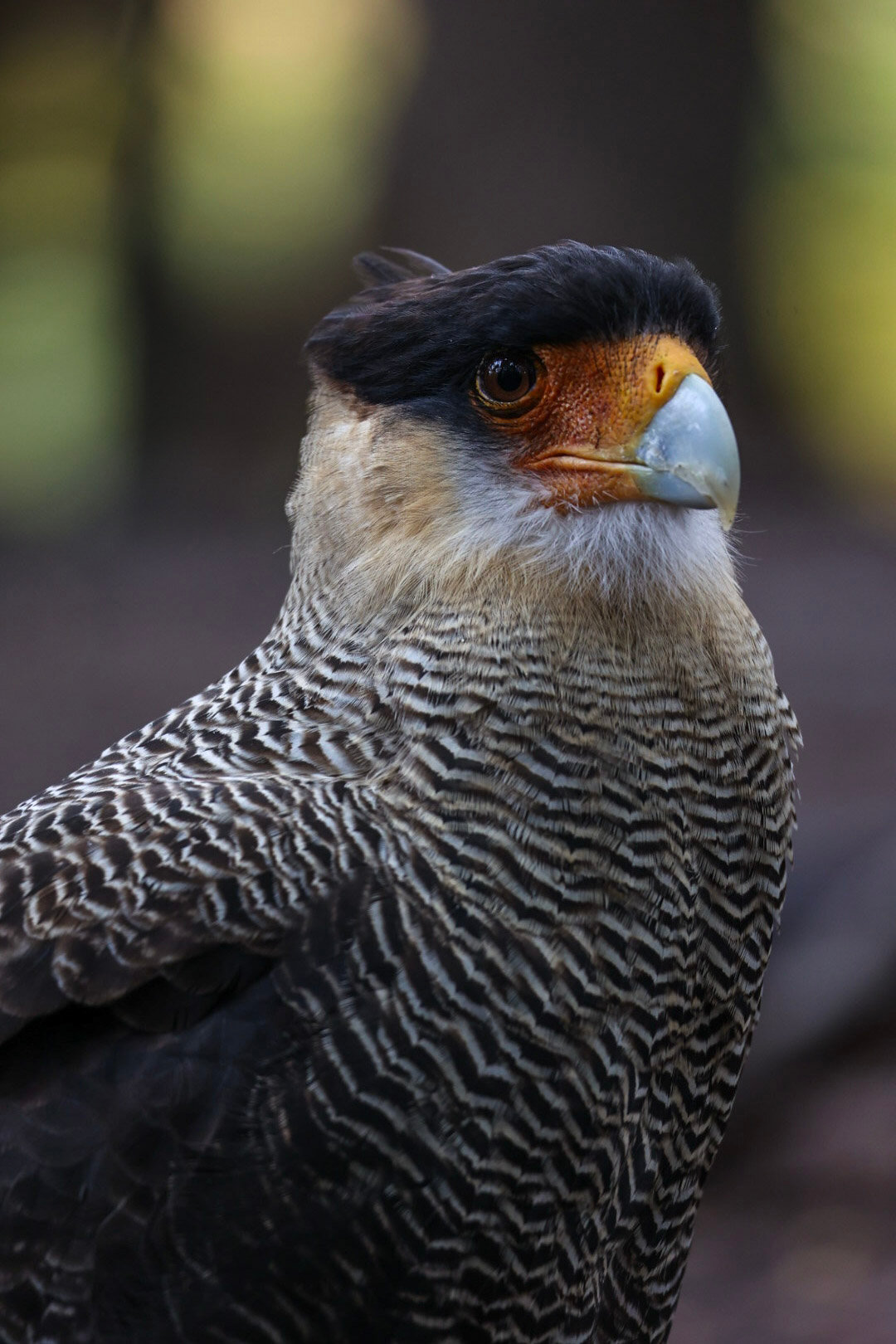
Parámos para almoçar numa zona de acampamento onde muita gente pára para comer, e os caranchos (Caracara plancus) sabem-no bem. São aves de rapina, mas ali andam pelo chão da floresta com um à-vontade de fiscal, de crista despenteada e olho atento, à procura de restos ou de quem lhes dê alguma coisa.
Deixam-se fotografar de perto, e é fácil achar-lhes graça. Mas aquela confiança diz mais sobre nós do que sobre eles. Dar de comer a animais selvagens é um erro, por muito boa que seja a intenção: uma ave que aprende a viver das nossas migalhas deixa de ser tão selvagem como devia.
Where the path from El Pilar meets the Senda Fitz Roy, at kilometre 8 of 10, the owners of the place were waiting for us.
We stopped for lunch at a camping area where many people stop to eat, and the caranchos (Caracara plancus, the crested caracara) know it well. They are birds of prey, but here they stroll across the forest floor with the ease of an inspector, crest ruffled, eye alert, looking for scraps or for someone who will give them something.
They let themselves be photographed up close, and it is easy to find them charming. But that trust says more about us than about them. Feeding wild animals is a mistake, however good the intention: a bird that learns to live off our crumbs stops being as wild as it should be.



VII
A montanha que fuma / The smoking mountain
Os Aonikenk, o povo tehuelche destas terras, chamavam-lhe Chaltén, a montanha que fuma, por causa das nuvens que quase sempre lhe tapam o cume. Em 1877, o explorador Francisco Moreno deu-lhe o nome de Fitz Roy, o capitão do Beagle. São 3405 metros de granito, e nesse dia fez jus ao nome antigo.
O plano era subir ao miradouro da Laguna de los Tres, mesmo aos pés da montanha. Com aquele tempo, não dava para subir.
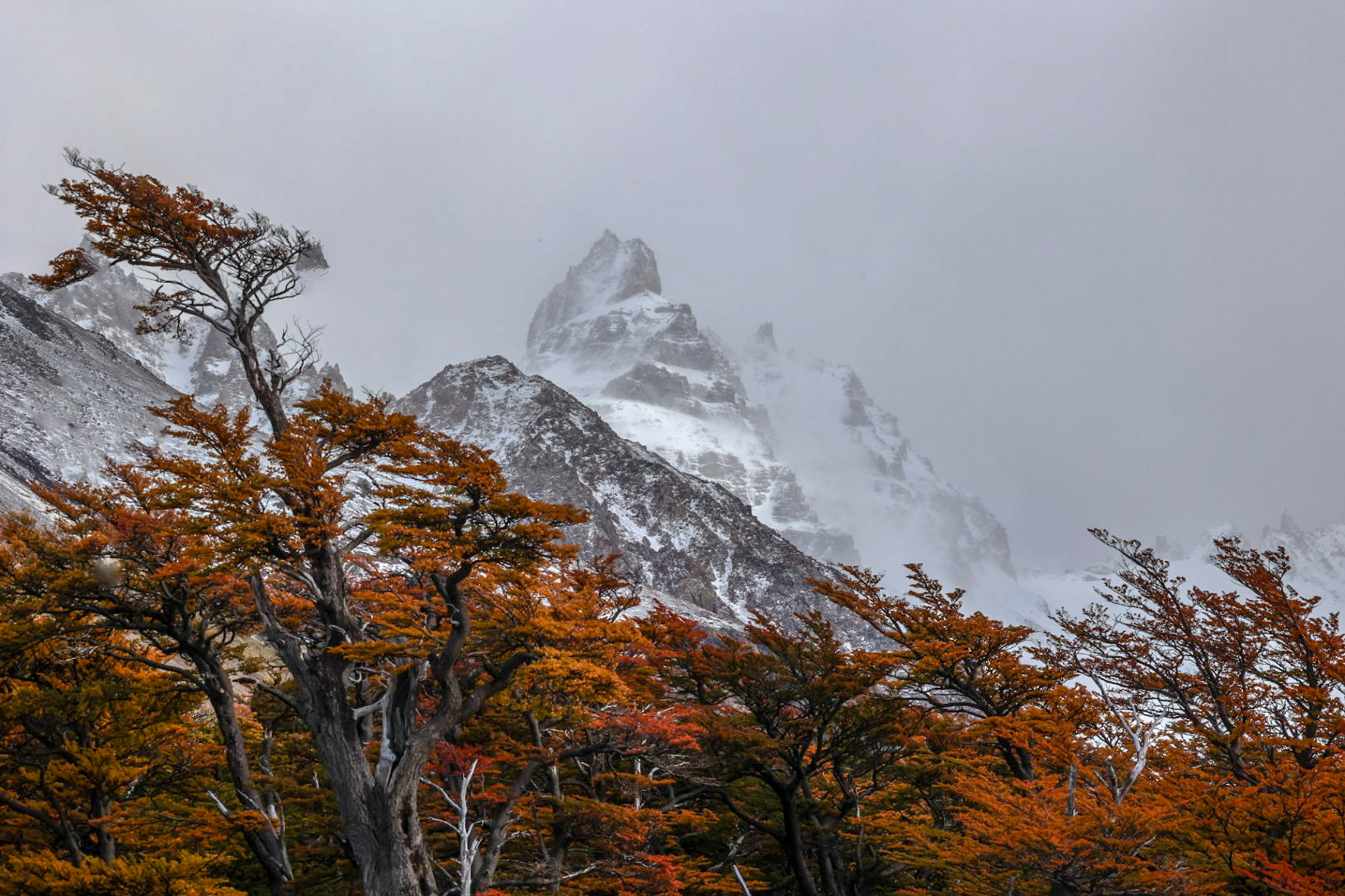
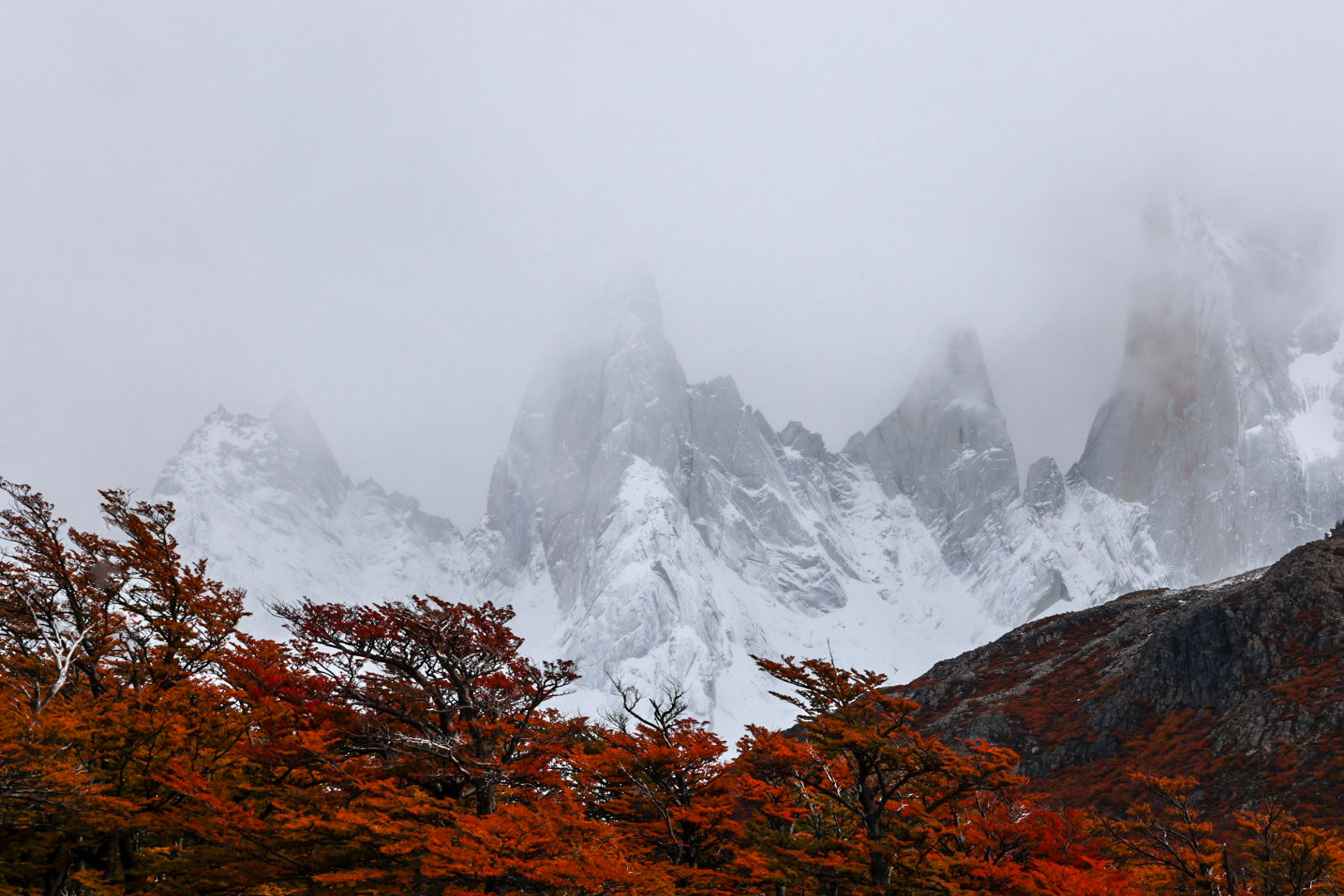
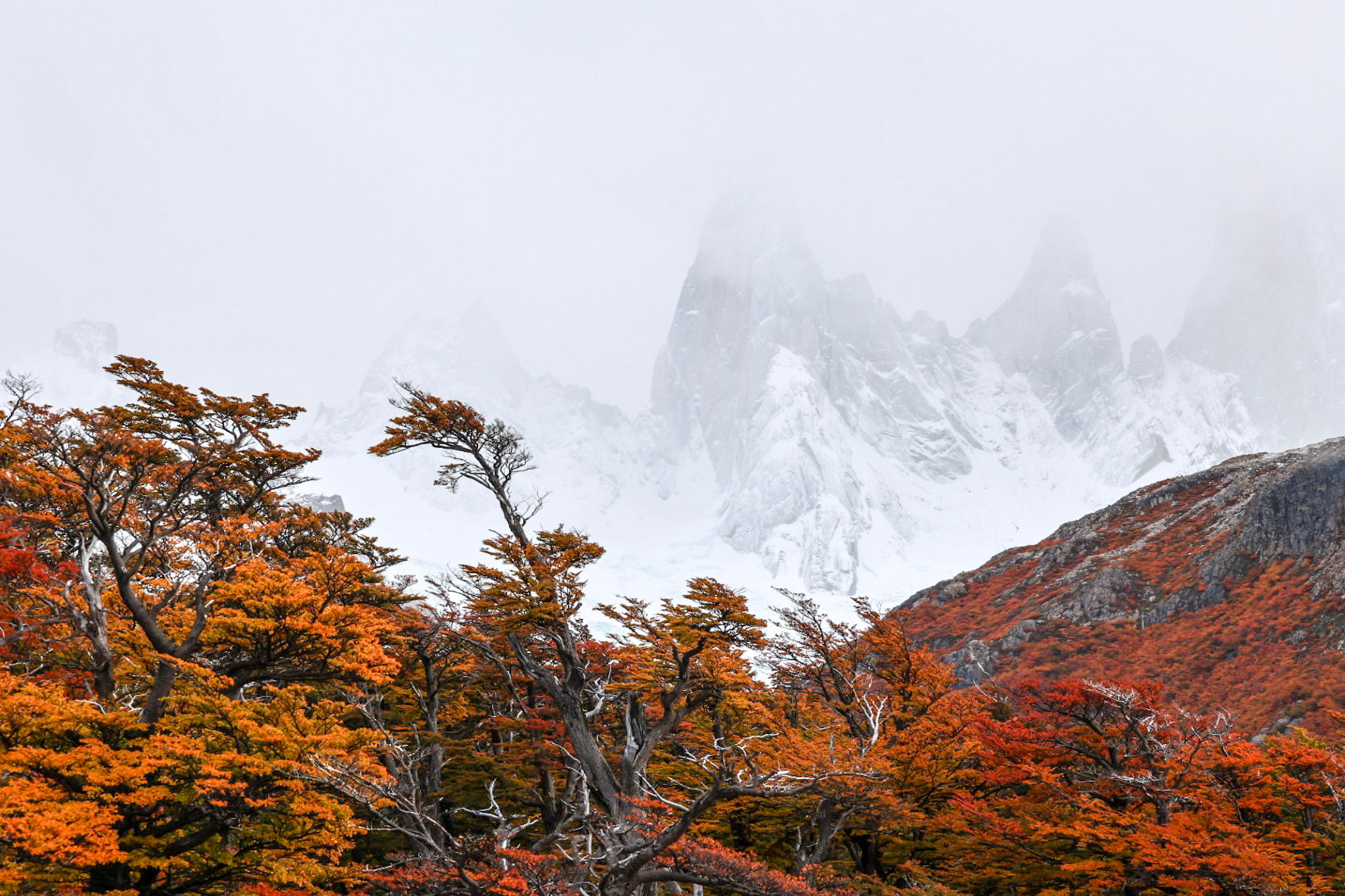
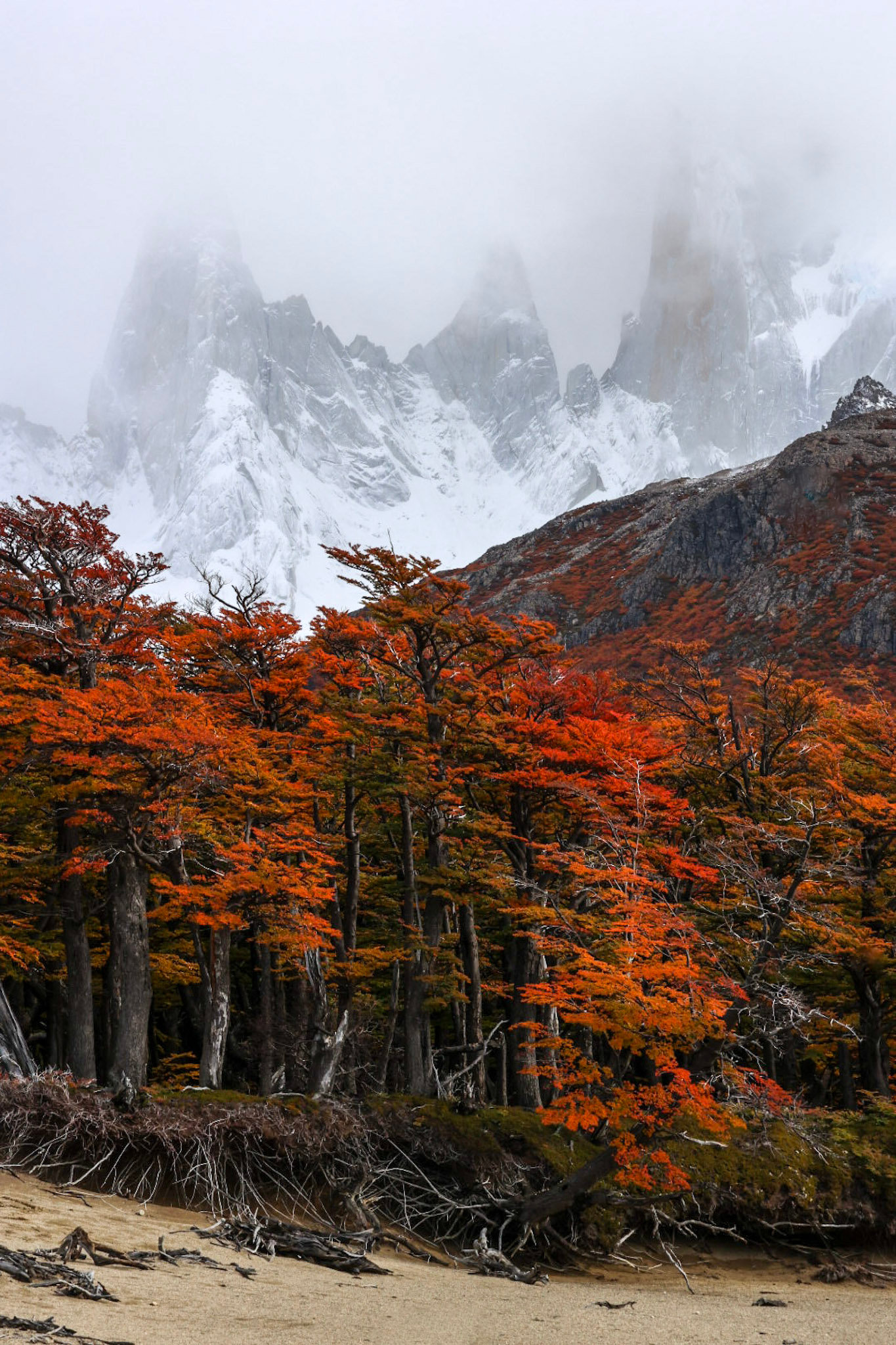
Nunca se mostrou toda. As agulhas apareciam e desapareciam dentro da neblina, uma de cada vez, por cima das lengas vermelhas, como se alguém estivesse a decidir quanto é que nos deixava ver. Fiquei ali um bom bocado, à espera de mais. Não veio mais, e não fez falta.
Há paisagens que se mostram. Esta deixou-se adivinhar, e acho que foi por isso que me esmagou mais.
The Aonikenk, the Tehuelche people of these lands, called it Chaltén, the smoking mountain, because of the clouds that almost always cover its summit. In 1877 the explorer Francisco Moreno named it Fitz Roy, after the captain of the Beagle. It is 3,405 metres of granite, and that day it lived up to its old name.
The plan was to climb to the Laguna de los Tres viewpoint, right at the foot of the mountain. In that weather, there was no going up.
It never showed itself whole. The needles appeared and disappeared inside the mist, one at a time, above the red lenga, as if someone were deciding how much we were allowed to see. I stayed there a good while, waiting for more. No more came, and it was not missed.
Some landscapes show themselves. This one let itself be guessed at, and I think that is why it crushed me more.

VIII
A descida / The way down
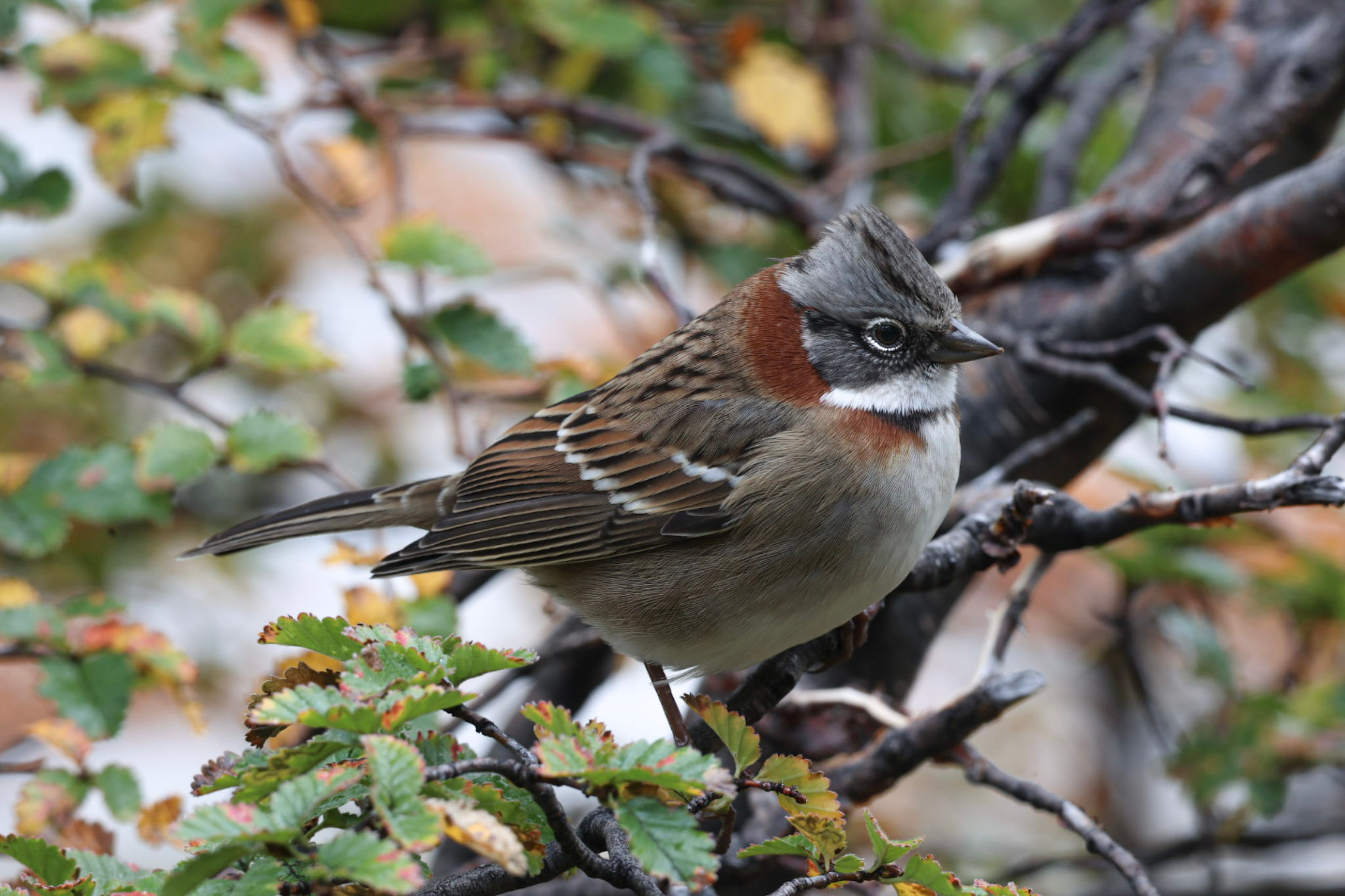
O regresso a El Chaltén faz-se pela Senda Fitz Roy, com a chuva de volta. Pelo caminho, um chingolo (Zonotrichia capensis) num ramo de ñire, sem pressa nenhuma, e o vale do rio de las Vueltas lá em baixo, a entrançar-se em braços de água cinzenta.
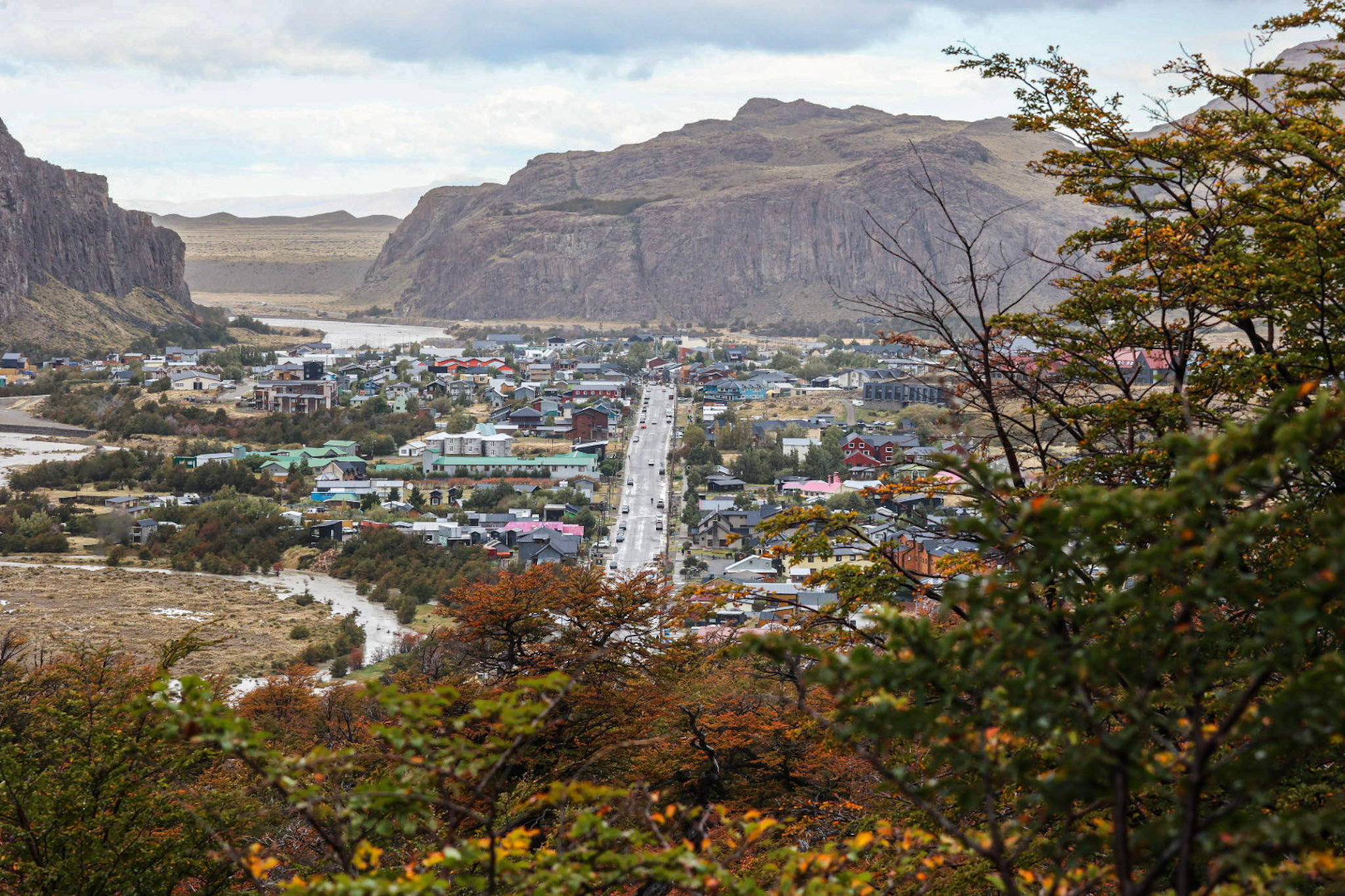
Depois a vila, pequena, no fundo do vale. Dezoito quilómetros e uns quantos climas depois, cheguei com aquela sensação que só alguns sítios dão: a de ter sido posto no meu lugar. Pequeno. E contente por isso.
The way back to El Chaltén follows the Senda Fitz Roy, with the rain back again. Along the way, a chingolo (Zonotrichia capensis, the rufous-collared sparrow) on a ñire branch, in no hurry at all, and the valley of the Río de las Vueltas down below, braiding itself into strands of grey water.
Then the village, small, at the bottom of the valley. Eighteen kilometres and several climates later, I arrived with that feeling only a few places give: of having been put in my place. Small. And glad of it.



IX
O que está em jogo / What is at stake
Nove dias depois desta caminhada, a 9 de Abril de 2026, o Congresso argentino aprovou a reforma da Lei dos Glaciares, por 137 votos contra 111, ao fim de quase doze horas de debate. Entrou em vigor a 24 de Abril. A lei de 2010, pioneira na América Latina, protegia os glaciares e o ambiente periglaciar (o terreno gelado à volta deles) como reservas estratégicas de água, e não deixava lá entrar minas. O país tem perto de 17 mil corpos de gelo inventariados. Com a reforma, passa a ser cada província a decidir que zonas ficam protegidas e onde se pode ir buscar cobre, lítio ou prata.
Quem a defende fala de investimento, de emprego e de regras claras. Quem a contesta, e foram milhares na rua e mais de 850 mil a subscrever uma acção em tribunal, lembra que um glaciar destruído não volta. Em Maio, um juiz federal recusou suspender a lei, mas aceitou julgar o caso. A discussão continua na justiça.
O Fitz Roy está dentro de um parque nacional, e as minas de que se fala ficam sobretudo mais a norte, nas províncias mineiras da cordilheira. Mas depois de um dia inteiro a andar entre gelo, lengas e um huemul, custa-me ouvir falar de glaciares como de um estorvo. Aquele gelo é água, e aquela água é o rio, a floresta, o pica-pau, o veado que quase já não existe e a vila lá em baixo.
Já sobram poucos sítios onde a natureza ainda manda assim. Não os protegemos por serem bonitos. Protegemo-los porque é deles que o resto depende. E porque precisamos de sítios que nos façam sentir pequenos.
Nine days after this walk, on 9 April 2026, the Argentine Congress approved the reform of the Glacier Law, by 137 votes to 111, after almost twelve hours of debate. It came into force on 24 April. The 2010 law, a pioneer in Latin America, protected glaciers and the periglacial environment (the frozen ground around them) as strategic water reserves, and kept mines out of them. The country has close to 17,000 catalogued bodies of ice. With the reform, it is up to each province to decide which areas stay protected and where copper, lithium or silver may be dug for.
Those who defend it speak of investment, jobs and clear rules. Those who oppose it, and there were thousands in the streets and more than 850,000 backing a court action, point out that a destroyed glacier does not come back. In May, a federal judge refused to suspend the law but agreed to hear the case. The argument continues in the courts.
Fitz Roy lies inside a national park, and the mines in question are mostly further north, in the mining provinces of the cordillera. But after a whole day walking among ice, lenga and a huemul, I find it hard to hear glaciers spoken of as an obstacle. That ice is water, and that water is the river, the forest, the woodpecker, the deer that barely exists any more and the village down below.
There are few places left where nature still rules like this. We do not protect them because they are beautiful. We protect them because the rest depends on them. And because we need places that make us feel small.
Fotografado no Parque Nacional Los Glaciares, Argentina, a 31 de Março de 2026.
Photographed in Los Glaciares National Park, Argentina, on 31 March 2026.
 Próxima história / Next storyTóquio →